

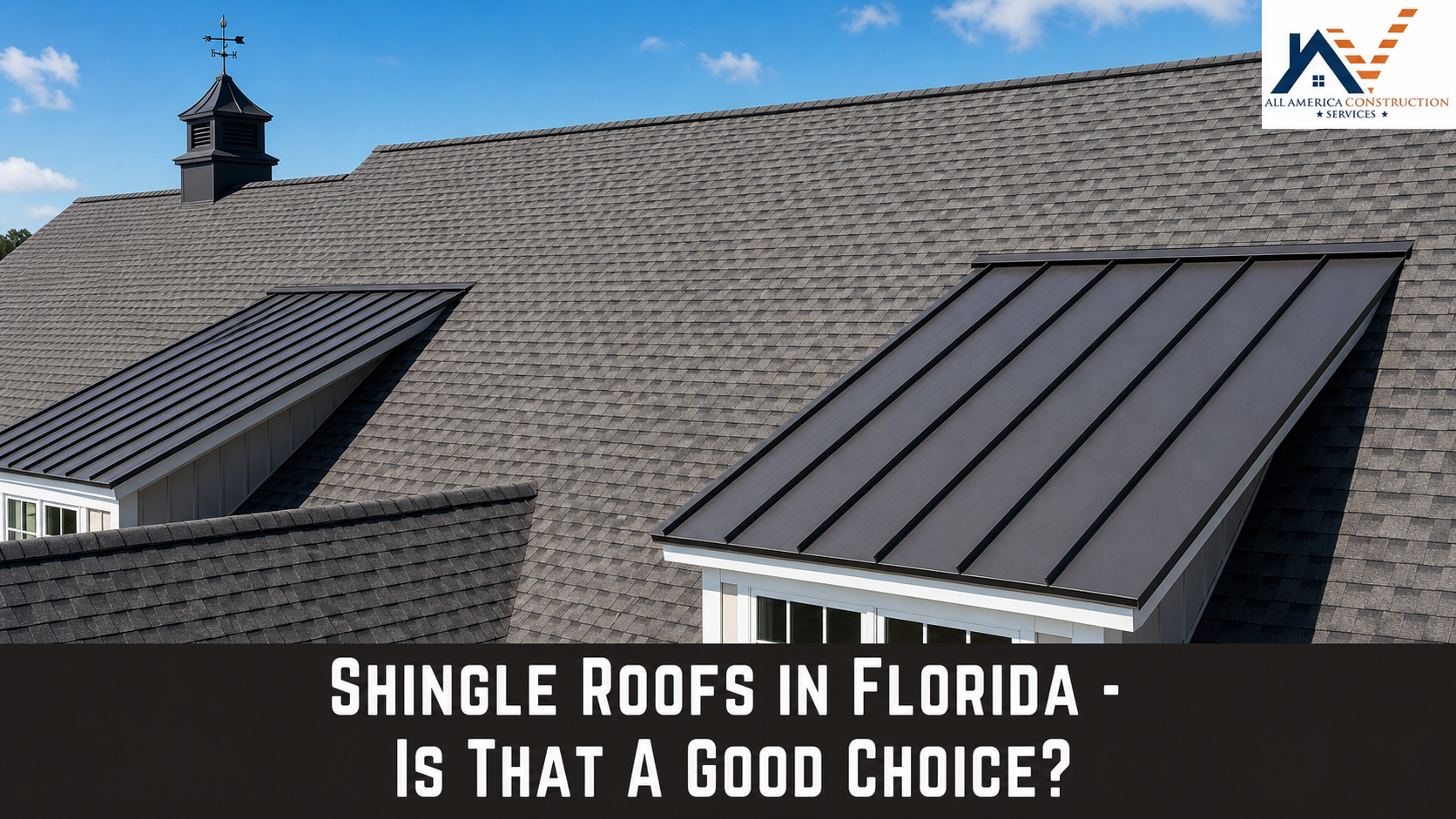
Almost every homeowner planning a roof in Florida runs into the same question. Are asphalt shingles a real choice in this climate, or are they only suited to milder places where the sun is gentler and the summer storms are smaller? The answer turns out to be more interesting than a flat yes or no. Shingle roofs can absolutely work in Florida, and many of them perform well for decades, but only when the grade of shingle, the wind and impact rating, and the installation are matched to the conditions the roof will actually face. Pick the wrong grade or accept a careless install, and the same climate that flatters a good shingle roof will chew through a poor one in a few seasons.
This is a decision-stage question, not a general overview, so this article treats it that way. It looks at why the question matters in Florida specifically, what features separate a Florida-ready shingle from a generic one, where installation makes or breaks the result, when shingles are a strong choice for a particular home, and when alternatives like tile or metal might be the smarter call. The aim is to give homeowners enough clarity to know whether shingles are the right answer for their property, and to recognize the conversation they should be having with experienced roofing companies in Broward County before signing anything.
Why the Question Even Comes Up in Florida
Shingle roofs are by far the most installed residential roofing system in the country, but Florida has reasons to ask whether the default choice is the right choice here. The climate, the storm season, and the long-term economics all shape the conversation.
Heat, Humidity, and UV Exposure Stress the Roof Daily
Florida roofs work hard every single day, not only during hurricanes. Intense ultraviolet exposure, surface temperatures that climb well into triple digits on summer afternoons, and persistent humidity all wear roofing materials faster than they would wear in a milder climate. For asphalt shingles, that means the protective granule layer, the asphalt binder, and the underlayment beneath all age on a compressed timeline compared with the same product installed in a northern state. A shingle rated for thirty years in a brochure may deliver something less than that in South Florida unless the homeowner picks a grade built for this kind of stress.
Hurricane Season Tests Every Roof Differently
The other reason the question comes up is hurricane season. Florida codes require a certain baseline of wind resistance, but baseline and resilient are not the same word. A shingle that meets the minimum can still be the wrong choice on an exposed coastal lot, while a higher-rated shingle properly installed has carried homes through serious storms with limited damage. So the question is really two questions at once. Are shingles fundamentally compatible with Florida conditions, and is this specific home a good candidate for a shingle roof rather than a heavier system like tile or a more storm-resilient option like standing seam metal?
What Makes a Shingle the Right Shingle for Florida
The phrase “asphalt shingle” covers a wide range of products with very different performance profiles. The decision a Florida homeowner makes is rarely between shingles and no shingles; it is between the right kind of shingle for this climate and a cheaper grade that has no business on a Florida roof.
Architectural and Premium, Not 3-Tab
The first dividing line is the type of shingle. Three-tab shingles, the thin flat product that defined budget roofs for decades, generally do not belong on a Florida home. They have lower wind resistance, thinner asphalt mats, and a much shorter realistic lifespan in this climate. Architectural shingles, sometimes called dimensional shingles, are heavier, have a thicker mat, and offer notably better wind and impact performance. Premium designer shingles step up further, with stronger backing, enhanced sealing, and longer manufacturer warranties.
For a Florida home, the conversation should usually start with architectural shingles at minimum, with premium options considered for higher-exposure properties or for owners who want maximum service life. The cost difference between three-tab and architectural is real but small relative to the difference in how long the roof lasts and how it performs in a storm.
Wind and Impact Ratings That Match the Exposure
Beyond the basic product type, ratings matter. Look for shingles with high wind ratings, the kind tested to withstand sustained winds well into hurricane range, and consider Class 3 or Class 4 impact ratings that hold up better against hail and wind-driven debris. These ratings are not marketing decoration. They reflect tests the product has passed, and on a Florida roof they are exactly the kind of performance the next storm will eventually demand. A high-rated shingle costs more, but it also tends to age more gracefully under the daily stress described earlier.
Energy Reflectance and Warranty Terms
Two further details deserve attention. Many higher-quality shingles now include enhanced reflectance designed to bounce back more of the sun’s heat instead of absorbing it. In Florida, that can reduce attic temperatures meaningfully, slow material aging, and ease cooling load over the summer. The benefit varies home to home and should not be promised as a fixed figure, but as a planning factor it favours premium shingles. Warranty terms matter too. A manufacturer warranty that requires specific installation conditions, registered products, and authorised contractors is worth checking before buying, since it tells you what conditions the manufacturer expects the product to meet.
Feature | Florida Implication | What to Look For |
Shingle type | 3-tab too light; architectural or premium needed | Architectural minimum, premium for exposed sites |
Wind rating | Must meet high-wind expectations | Rated for sustained hurricane-range winds |
Impact rating | Storm debris and hail risk | Class 3 or Class 4 where available |
Reflectance | Heat and UV slow roof life | Higher reflectance options for sun exposure |
Warranty terms | Real coverage depends on conditions | Registered products, authorised installation |
Where Installation Makes or Breaks a Florida Shingle Roof
A premium shingle installed carelessly can underperform a mid-grade product installed by a skilled crew. In Florida, the install is at least as important as the product. The same wind that tests the shingle also tests every fastener, every flashing, and every edge detail.
Underlayment, Flashing, and Edge Treatment
The underlayment beneath shingles is the layer that actually keeps water out when the shingles themselves are stressed by wind-driven rain. A Florida roof benefits from a higher-grade underlayment, often a synthetic or peel-and-stick product, rather than the lighter felt used on minimal jobs. Flashings at chimneys, walls, valleys, and skylights are common leak starting points, and the quality of those details has a disproportionate effect on whether a roof leaks during the next storm. Drip edges, starter strips, and ridge treatments all matter for the same reason. None of this is hidden complexity. It is the routine craftsmanship a professional roofer brings, and it is exactly where shortcuts show up later as leaks.
Fastening Patterns and Sealing
Wind resistance in shingles is largely a function of how the shingles are fastened and how they seal to each other. Florida code calls for specific nailing patterns, and using more nails than the minimum in higher-exposure areas is a routine and inexpensive way to add resilience. The self-sealing strip on each shingle bonds in sunlight and heat, which is what holds adjacent shingles together against lift. Installing in conditions that allow proper sealing, and respecting manufacturer guidance on cold-weather adhesives where used, is the kind of small detail that separates a roof that survives a storm from one that loses sections.
When Shingles Are the Right Call for a Florida Home
For many Florida homes, shingles are not just an acceptable choice but a strong one. Recognising those scenarios helps a homeowner make the decision without second-guessing.
Most Inland and Suburban Residential Properties
The straightforward case is a typical inland or suburban Florida home where the roof faces standard residential exposure rather than direct coastal wind. With an architectural or premium shingle, proper underlayment, and a careful install, these roofs perform well for decades, look attractive, and cost less to install than tile or metal alternatives. For a homeowner who wants a balance of appearance, durability, and value, shingles are often the most sensible choice on this kind of property.
Homes Where Weight or Slope Limits Tile
Some homes are not good candidates for tile, even though tile is sometimes treated as the default in Florida. Lower-slope roofs that fall below tile’s minimum, or homes whose structure was not built to carry the added weight of tile, are natural candidates for a quality shingle system. In those cases, the conversation is less about whether shingles are good enough and more about which shingle product matches the home best.
Budget-Conscious Replacements Where Quality Still Matters
Shingles also make sense when a homeowner needs to replace a roof and wants quality construction without the higher upfront cost of tile or metal. The key is to avoid trading down to a poor grade just to save a little more. Spending the difference between three-tab and architectural, or between architectural and premium, almost always pays off in lifespan and storm performance.
When You Should Consider Tile or Metal Instead
There are also Florida scenarios where shingles are not the strongest answer. Recognising them is just as important as recognising when shingles fit.
Direct Coastal Exposure and High-Wind Lots
Properties sitting directly on a coast, on an open lot with no surrounding shelter, or in zones with the most demanding wind requirements may benefit from a roofing system designed specifically for those conditions. Standing seam metal, in particular, offers a continuous fastened surface that handles severe wind exceptionally well, and quality tile properly installed with hurricane clips has its own track record. Shingles can still work on these properties at the highest grades, but the case for considering alternatives is real and worth a contractor conversation rather than a default choice.
Homes Where Long Lifespan and Distinctive Look Matter
Tile has a long history in Florida and tends to outlast shingles by a wide margin when properly maintained. For homeowners planning to stay in the home for decades, or for those who specifically want a tile aesthetic, that lifespan can outweigh the higher install cost. Metal offers similar longevity with a different visual character. If the priority is the longest possible service life or a particular look that shingles cannot replicate, the conversation should include those systems on equal footing.
Maintenance Reality for Florida Shingle Roofs
One reason shingle roofs sometimes get a poor reputation in Florida is that they need real maintenance, and many owners give them none. A roof that gets routine attention performs differently from one that is ignored.
Annual Inspection and Post-Storm Review
Florida shingle roofs benefit from an annual professional inspection plus a check after any major storm. The inspection catches loose, cracked, or missing shingles, damaged flashing, sealant failures, and small issues that are simple to repair before they become leaks. A storm review confirms whether the roof came through wind events intact or quietly sustained damage that needs attention. Treating the roof as a system that deserves yearly review, rather than as something to think about only when it leaks, is the single biggest reason some shingle roofs in Florida last well and others fail early.
Gutter Care, Tree Management, and Cleaning
Routine care extends beyond the roof itself. Clean gutters prevent water from backing up under shingles. Trimming back overhanging branches reduces debris, abrasion, and the algae growth that tends to discolour shingles in Florida’s humidity. Periodic professional cleaning where needed keeps the surface in better shape and protects the granule layer. None of this is expensive, but skipping it shortens the life of any shingle roof and is much of why some look worn after a decade.
How to Recognize When Repair or Replacement Is Needed
Even with the right product and good maintenance, shingles eventually need repair or replacement. Knowing what to watch for keeps small problems from becoming large ones.
Signs the Roof Needs Attention Soon
Granule loss visible in the gutters, shingles that look curled or cupped, missing or cracked shingles after a storm, dark streaks that do not respond to cleaning, and any active or even occasional leak are all signs the roof needs professional attention. Not all of these mean full replacement. Many can be addressed with targeted repair, especially when caught early. The mistake is waiting until the symptoms force action, since by then the underlying damage is usually broader than it needed to be.
When to Plan Full Replacement
Replacement becomes the practical answer when a roof shows widespread granule loss, multiple repaired areas, recurring leaks, or visible material failure across many sections. At that point, continuing to repair tends to cost more over time than a planned replacement on a sound product. A professional inspection that maps the condition honestly, including the parts of the system not visible from the ground, is the right starting point for that decision. For the most urgent cases, having a relationship with a team that handles emergency roof repair Broward County homeowners trust means storm-driven issues do not become extended exposure.
How All America Construction Services Helps Florida Homeowners Decide
All America Construction Services treats the shingle question as a property-specific decision rather than a default. The team looks at the home, the exposure, the existing roof if there is one, and the homeowner’s priorities, and gives an honest read on whether shingles are the right choice for that home and which grade and product fit best.
On-Site Assessment Before Any Recommendation
The process starts with a free on-site assessment. The team walks the roof, evaluates the structure and exposure, and listens to what the homeowner cares about. The recommendation that follows reflects what the property actually needs, not a standard pitch. Sometimes that means premium shingles installed with extra care. Sometimes it means flagging that a particular property is a better candidate for tile or metal. Either way, the homeowner gets a decision built on the home itself.
Built for the Florida Standard, Inspection to Cleanup
If a shingle roof is the right choice, the install reflects Florida realities. Architectural or premium product, robust underlayment, careful flashing, code-compliant fastening, and a clean cleanup afterward. The same crew handles maintenance, repair, and storm response, so the roof has a single team behind it from install onward, with familiar faces returning whenever the roof needs attention. To begin the conversation, request a free on-site assessment and find out whether shingles are the right answer for your home.
A short visit and an honest read of the property are usually enough to know whether shingles fit the house, which grade suits the exposure, and what the project will involve. From that conversation the rest of the plan falls into place, with realistic timing, a clear scope, and no surprises once the work begins on your roof, which is the kind of starting point that keeps shingle projects on track from the first day to the final walkthrough.
Frequently Asked Questions
What are the most popular types of metal roofing for residential homes?
Standing seam metal, metal shingles and tiles, stone-coated metal, and corrugated panels cover the main categories used on residential projects. Each has a distinct visual style and performance profile, and the right choice depends on the home’s architecture, exposure, and the homeowner’s priorities. A property-specific consultation is the best way to match the system to the home.
How long does a metal roof last in Florida?
Most quality metal roofing systems last forty to seventy years or more in Florida, depending on the material and how well the roof is maintained. Copper and zinc roofs can last considerably longer. Even the shortest realistic estimate for a properly installed metal roof considerably exceeds the typical lifespan of asphalt shingle alternatives, which is part of why metal appeals to long-term-thinking homeowners.
Are metal roofs energy-efficient?
Many metal roofing systems include reflective treatments that reduce solar heat absorption, easing cooling load in a climate like Florida’s. The benefit varies by home, exposure, and the specific product, so it should not be quoted as a fixed figure, but as a planning factor it favours metal for homes with significant sun exposure. Reflectance is one of several reasons metal appeals to Florida homeowners.
How do metal roofs handle hurricanes?
Quality metal systems installed to current Florida code generally handle hurricanes well, with standing seam in particular performing strongly under high-wind conditions. No roofing system can be promised to come through every storm untouched, but the track record of properly installed metal in hurricane-prone areas is meaningful. Specifying products with the right wind and impact ratings, and ensuring quality installation, is what delivers the performance.
What is the best metal for a coastal Florida home?
Aluminum is often the best choice for homes near the coast because it does not corrode under salt-air exposure the way some steel products can. Properly coated steel can also work in coastal settings if the coating is matched to the conditions. For inland homes, galvanized or galvalume steel is typically the best value. A consultation with a roofer who knows the specific property is the right way to choose.
Are metal roofs noisy during Florida rain?
Properly installed metal roofs with appropriate underlayment and insulation are generally no louder than other roofing systems during rain. The image of metal as a noisy material comes from older installations on uninsulated barns and similar buildings, not from modern residential installations. A quality install in a residential home rarely produces noise that homeowners describe as a problem.
Does All America Construction Services install metal roofing in Florida?
Yes. The team installs standing seam, metal shingles, stone-coated metal, and corrugated systems across South Florida, in the material that matches the property and exposure. The conversation starts with on-site assessment and ends with a recommendation built on the home itself. Contact the team to schedule a consultation.