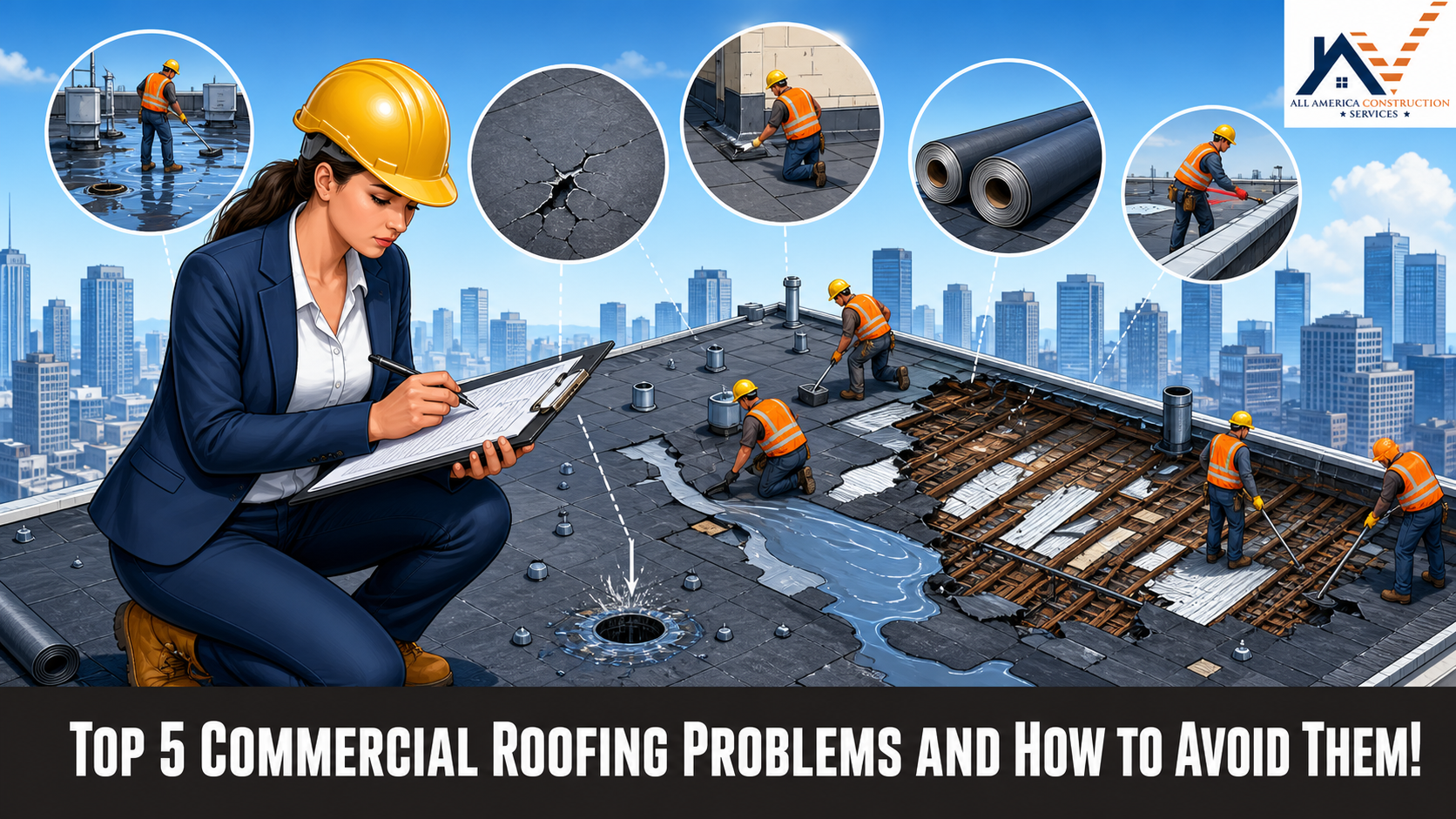
Commercial roofs in South Florida lead a hard life. They are large, they are flat or low-slope, they take direct sun for hours every day, and they spend half the year exposed to wind, rain, and the occasional serious storm. Most of the problems they develop are not surprises. They are the same handful of issues, repeating across building after building, traceable to the same predictable causes. Property owners and facility managers who learn what those issues look like, and what actually prevents them, are the ones whose roofs reach their full service life without major incidents along the way.
This article is for owners, managers, and operators of commercial buildings across South Florida. It walks through the five problems that account for the majority of commercial roofing calls in this region, what causes each one, what the warning signs are, and what genuinely prevents them. The aim is not a generic overview. It is a practical framework that lets a building owner spot trouble early, ask the right questions of their roofing partner, and avoid the much larger costs of letting any of these issues run.
If your commercial roof is showing signs of any of these problems, an early assessment from experienced roofing companies in Broward County is the right first step. Catching commercial roofing issues early almost always costs a fraction of what it costs to address them once they have spread.
Why Commercial Roofs Are a Different Conversation from Residential
Before getting into the five problems, it is worth pausing on why this conversation belongs in its own article rather than borrowing residential advice. Commercial roofs face the same weather as houses do, but the systems, the slopes, the access patterns, and the stakes are all genuinely different, and that affects how each of the problems below shows up.
Flat or Low Slope, Larger Square Footage, Different Systems
Most commercial roofs in South Florida are flat or low-slope, sometimes covering tens of thousands of square feet across a single building. They use systems that residential homes rarely see, including single-ply membranes such as TPO, PVC, and EPDM, modified bitumen, and built-up roofing. Each of those systems has its own failure modes and its own maintenance needs. A flat roof handles rainfall by drainage rather than runoff, which is why ponding becomes a routine issue rather than a curiosity. The sheer surface area also means that a small percentage of failure across a roof can equal a large amount of compromised membrane in absolute terms, and that the cost of running a system into the ground rises faster than on a smaller residential roof.
Rooftop Equipment, Operations, and Business Impact
Commercial roofs also carry equipment that residential roofs do not. HVAC units, exhaust fans, satellite dishes, solar arrays, and access ladders all create penetrations that need flashing, and each penetration is a potential leak source if attention slips. Beyond the physical differences, a commercial building has operations that a leak or storm can interrupt: tenants, customers, inventory, equipment, and revenue. The cost of a roofing problem on a commercial building is rarely just the cost of the roof repair. It is the cost of business disruption, claims management, and the time spent dealing with consequences. Understanding this is what makes the five problems below worth preventing in the first place; the payoff of early action is much greater than on a residential roof.
Problem 1: Persistent Roof Leaks
Roof leaks are the most common commercial roofing problem and the one that most often signals a broader system issue beneath the surface. A single leak in a defined location is not always a major concern, but the leak that returns after repair, or the building with multiple active leak points, is telling its owner that the roofing system is no longer doing its job.
What the Warning Signs Actually Look Like
Visible water stains on interior ceilings, damp drywall, peeling paint, and the appearance of mould or efflorescence near the wall-roof junction are the most familiar signs. Less obvious but equally important are damp insulation revealed during a ceiling tile inspection, unexplained humidity inside the building, and corrosion around HVAC penetrations on the roof. Many leaks travel laterally before reaching the interior, so the visible drip rarely indicates the exact source of entry. Diagnosing a commercial leak well usually requires looking at the whole roof, not only the spot where the water shows up below.
What Actually Prevents Them
Regular professional inspection is the single most effective prevention. Twice a year is standard for commercial roofs in Florida, with additional checks after any significant storm. The inspection catches small failures at flashings, seams, penetrations, and edges before they become active leaks. Pairing that with prompt repair of small defects, rather than waiting for them to grow, keeps leaks from establishing in the first place. When a leak does occur, fast response matters; experienced emergency roof repair Broward County teams can stabilize the situation quickly and prevent secondary damage to ceilings, fixtures, and operations.
Problem 2: Ponding Water
Florida’s heavy rain and the prevalence of flat or low-slope commercial roofs make ponding water a persistent issue. Water that does not drain off within roughly forty-eight hours is generally considered ponded, and the longer it sits, the more damage it can cause to the roofing membrane and the structure beneath.
Why It Happens and What It Does
Ponding usually traces to one of three causes: insufficient slope built into the roof from the start, drains that have become blocked or are inadequately sized for the rainfall the building receives, or structural sagging that has created low spots over time. Whatever the cause, the effects compound. Standing water accelerates membrane breakdown, encourages biological growth that further compromises the surface, increases the load on the structure, and intensifies thermal cycling stress as the water heats and cools daily. Ignored, pondering turns a routine maintenance issue into a structural concern.
Drainage Improvements and Surface Restoration
The fix depends on the cause. Blocked drains and scuppers need cleaning, and the roof’s drainage capacity may need re-evaluation if heavy rain consistently overwhelms it. Where the slope is insufficient, tapered insulation can sometimes be added during a maintenance or restoration project to encourage better runoff. Where the membrane has degraded under standing water, restoration or replacement of affected sections becomes part of the scope. Regular drain cleaning, especially heading into hurricane season and after major storms, is the simplest preventive step a building owner can take.
Problem 3: Poor Installation
Many of the worst commercial roofing problems trace back to the original installation. A roof can look acceptable from the ground on the day it is finished and still carry the seeds of premature failure if the work was done carelessly. Once a building has a poorly installed roof, the consequences play out for years.
Telltale Signs of an Inadequate Install
Inconsistent seam quality, visible bubbling or fishmouthing in single-ply membranes, improperly sealed flashings at penetrations and curbs, mismatched materials, and seams running in the wrong direction relative to slope are common signs. Some of these are visible to a building owner; others require a roofing professional to identify. A roof that develops multiple unrelated problems within the first few years of its life, despite ordinary use and weather, is almost always carrying installation defects that should have been caught at the time.
Hiring and Project Oversight
The prevention is hiring well and overseeing the work. That means selecting a contractor with verifiable commercial experience, written references, proper licensing and insurance, and a quote that describes the system, materials, fastening method, flashing approach, and warranty in concrete terms. It also means asking who will actually be on site during the work, what the inspection points are, and how the finished installation will be documented. Building owners who treat the install as a project to manage, not just a cheque to write, are the ones whose roofs reach full service life.
Problem 4: Lack of Maintenance
If installation is the foundation, maintenance is what keeps the structure standing on it. Commercial roofs are often treated as out-of-sight, out-of-mind components until something goes wrong. The owners who avoid the worst surprises are the ones who built a regular maintenance cadence and kept to it.
What Routine Maintenance Should Include
A proper commercial maintenance program covers several elements. Visual inspections of the entire roof surface, with particular attention to seams, flashings, drains, and penetrations. Cleaning of drains, scuppers, and gutters so water moves where it is supposed to. Removal of debris that has collected against drains or in low spots. Targeted repair of any small defect found before it can grow. And documented records of each visit so the building’s roof history is built up over time. None of this is expensive on its own; the cost saving comes from preventing the larger problems it heads off.
The Cumulative Cost of Neglect
A roof that never sees a professional eye between installation and the first major leak almost always costs its owner more in the long run. Small flashing failures that would have been a one-hour repair grow into water-intrusion patterns that affect insulation, structural members, and interior fixtures. Drains that have not been cleaned in seasons block during the first heavy rain of the year and create ponding that begins damaging the membrane immediately. Once a roof has slipped behind on maintenance, returning it to good condition is more involved than keeping it there in the first place. For property managers in particular, building a maintenance schedule into the annual budget is one of the highest-value commitments available.
Problem 5: Weather Damage
South Florida’s storms produce the most dramatic commercial roofing damage and the most expensive emergencies. Hurricane-force winds, prolonged heavy rain, hail in some events, and wind-driven debris all stress commercial roofs in ways ordinary weather never tests. Even a sound roof, well-installed and well-maintained, can take significant damage from a major storm. The difference between a roof that recovers easily and one that turns into a long disruption is largely about preparation and response.
What Weather Damage Typically Looks Like
After a storm, commercial roofs show damage in predictable patterns: torn or lifted membrane sections at edges and corners where wind pressure peaks, displaced flashing at penetrations, granule loss on modified bitumen systems, punctures from wind-driven debris, damage to HVAC and rooftop equipment that compromises their roof penetrations, and bent or broken metal panels on systems that use them. Some of this is obvious; some requires a professional walk-through. Post-storm inspection should be standard for any commercial property, regardless of whether the building owner sees damage from the ground.
Preparation and Response That Actually Work
Real storm preparation starts well before hurricane season. It includes a complete roof inspection in late spring, addressing any vulnerabilities found, ensuring drains are clear and equipment is properly secured, and confirming the maintenance and inspection records are current in case of an insurance claim. When a storm does cause damage, fast response matters: contacting a roofing partner immediately to stabilize the situation, documenting the damage thoroughly with photographs, making temporary repairs to prevent further interior damage, and scheduling permanent repair on the basis of a full assessment rather than a quick estimate.
Problem | Most Telling Sign | What Actually Prevents It |
Roof leaks | Water stains, damp insulation, recurring drip | Twice-yearly inspection plus prompt repair |
Ponding water | Standing water 48+ hours after rain | Drain cleaning, slope correction, restoration |
Poor installation | Multiple unrelated issues in first few years | Verified contractor, clear scope, oversight |
Lack of maintenance | Small defects allowed to grow unchecked | Documented maintenance program twice a year |
Weather damage | Storm-driven tears, lifts, displaced flashing | Pre-season prep, fast post-storm response |
What All Five Problems Have in Common
Looking across these five, a pattern emerges. Each of them is a problem that grows slowly when ignored and resolves cheaply when caught early. None of them is a sudden mystery. Each is a known issue with a known fix, and the difference between a manageable maintenance line item and a major project usually comes down to how soon the owner acted. That is the operative insight for any commercial property: the cost curve of a roofing problem is steep and unforgiving once it has been allowed to develop, and almost flat if addressed promptly.
What a Professional Commercial Inspection Actually Includes
Building owners often hear “we recommend an inspection” without knowing what that visit involves. Understanding the scope helps a property manager judge whether the inspection they are getting is thorough enough to actually prevent the problems above.
The Walk-Through, the Detail Work, and the Documentation
A proper commercial inspection covers the entire roof surface, not only the obvious problem areas. The inspector walks the field of the roof checking for membrane condition, seams, ponding indicators, and surface damage. Each penetration, including HVAC curbs, vents, drains, scuppers, and equipment supports, gets individual attention because penetrations are statistically where most leaks begin. Edges, parapet walls, and flashings receive their own review, since wind pressure peaks at edges and corners and that is where storm damage concentrates. The interior side gets a look too, where access allows, since ceiling and attic conditions often reveal moisture that has not yet reached visible drip stage.
What You Should Get When the Visit Is Done
The deliverable from a quality inspection is not just a verbal summary. It should include photographs of problem areas, a written list of findings with severity ratings, a prioritised list of recommended actions, and an honest read on the overall condition of the roof. Building owners who collect these reports over time end up with a documented history of their roof that supports planning, budgeting, and insurance claims when storms cause damage. The inspection that fits on a sticky note is almost never the inspection that prevents the bigger problem; the inspection that produces a real document is the one that pays back its small cost many times over.
How All America Construction Services Helps Commercial Property Owners
All America Construction Services treats commercial roofing as an ongoing relationship rather than a one-time install. The team handles assessment, repair, maintenance, restoration, and full replacement across commercial properties in South Florida, with the same crew available for emergency response when storms cause urgent damage.
Inspection and Maintenance Programs
Most commercial customers benefit most from a scheduled inspection and maintenance program tailored to their roof’s type, age, and exposure. The team walks the roof on a regular cadence, documents each visit, addresses small defects before they grow, and maintains the records that support both routine planning and any future insurance conversation. That kind of program is usually the most cost-effective decision a building owner can make about their roof.
Schedule a Commercial Roof Assessment
If your commercial roof has shown any of the warning signs in this article, or if it has been more than a year since the last professional inspection, the next step is straightforward. Request a free commercial roof assessment and start the conversation with a team that knows what to look for. From the assessment, you receive a clear read on the roof’s current condition, a prioritised list of any concerns, and a recommendation that fits the building’s situation rather than a generic pitch.
Frequently Asked Questions
What is the most common commercial roofing problem in Florida?
Persistent roof leaks lead the list, both because they are the most visible to building occupants and because Florida’s climate creates so many opportunities for water to find weaknesses in a roofing system. Behind a single leak there is often a broader issue with seams, flashings, or penetrations that becomes obvious only when the full roof is inspected.
How often should a commercial roof be inspected?
Twice a year is the standard for commercial roofs in Florida, with additional inspections after any significant storm. Twice-yearly inspections allow the small defects caught in spring to be addressed before hurricane season and the storm-related issues caught in autumn to be repaired before winter rains.
What causes ponding water on a commercial roof?
The three usual causes are insufficient slope designed into the original roof, blocked drains and scuppers, and structural settling that has created low spots over time. Whichever the cause, water that does not drain within forty-eight hours after rain begins damaging the membrane and adds load to the structure.
How can I tell if my commercial roof was installed poorly?
The clearest indicator is a roof that develops multiple unrelated problems within its first few years despite ordinary use and weather. Other signs include inconsistent seams, visible bubbling in single-ply membranes, poorly sealed flashings, and mismatched materials. A professional inspection can identify defects that are difficult for a building owner to spot.
What should be included in a commercial roof maintenance program?
A solid program includes visual inspection of the full roof, drain and scupper cleaning, debris removal, targeted repair of small defects, and documented records of each visit. Cadence matters: twice a year for most commercial roofs in Florida, with extra checks after storms.
What should I do immediately after a storm damages my commercial roof?
Document everything with photographs, contact a roofing professional to stabilise the situation, make temporary repairs to prevent further interior damage, and schedule a full assessment to determine the permanent scope. Save receipts for any emergency work, since they often qualify for insurance reimbursement.
Does All America Construction Services handle commercial roofing in South Florida?
Yes. The team handles commercial assessment, repair, maintenance, restoration, full replacement, and emergency response across South Florida commercial properties. Most customers benefit from a scheduled inspection and maintenance program; the same crew handles urgent issues when they arise. Contact the team to schedule an assessment and learn what makes sense for your building.