

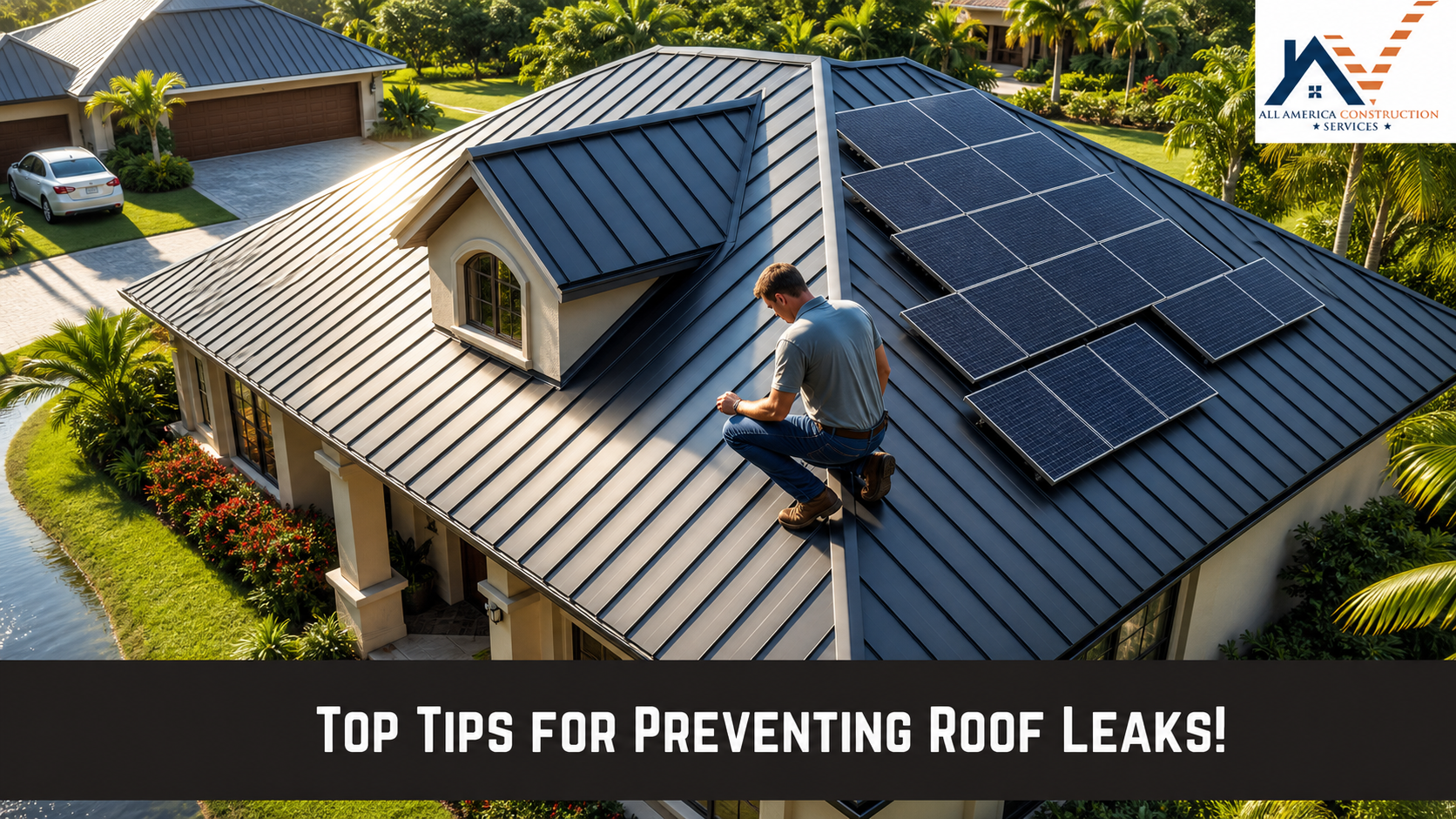
Most roof-leak prevention advice runs along the same comfortable lines. Inspect regularly. Use good materials. Hire someone qualified. None of that is wrong, but it is also not particularly useful, because by the time a homeowner reads it they have heard it before. The advice that actually changes outcomes is the more specific version: where the leaks really start, which inspections catch problems early enough to matter, and which routine habits make the largest difference for a Florida home. That is the version this article tries to deliver.
The framing here is deliberately decision-stage. Each of the tips below is paired with the reason it matters and the small misstep most homeowners make. The goal is not to list everything a Florida roof needs across its lifetime; it is to give a homeowner enough specifics that they can walk out the door tomorrow and act on at least two or three of them. Leak prevention is mostly about catching weak points before they become leaks, and the homeowner who knows where to look is the one whose roof keeps working quietly in the background instead of demanding emergency attention.
If your roof has already shown signs of trouble, or if it has been a while since the last professional eye looked at it, an early conversation with experienced roofing companies in Broward County is the right first step. Almost every Florida leak that becomes serious passed through a stage where prevention was still simple.
The Real Reason Most Florida Roofs Leak
The leak that ruins a homeowner’s week rarely starts where the water shows up. It begins at a flashing detail that has lifted slightly, a sealant that has dried and cracked, a tile that has slipped a quarter inch, a fastener that has worked loose under wind cycling, or an underlayment that has aged out under intact-looking shingles. Water finds these openings during wind-driven rain, travels through the roof system to wherever gravity sends it, and reveals itself as a ceiling stain in a room that may not be anywhere near the actual entry point. Understanding this is what changes a homeowner’s prevention strategy from generic to specific. Roofs do not leak because of weather alone; they leak because weather found a weakness the homeowner did not know was there.
Two facts shape every prevention conversation in Florida. The first is that the climate stresses roofs harder than most other regions, so weak points develop faster and the window between “fine” and “leaking” is shorter. The second is that the weak points are almost always known categories. They are flashings, penetrations, valleys, edges, sealants, and the layer beneath the visible covering. Strategies that focus there outperform strategies that focus on cosmetics every time.
Tip 1: Schedule Inspections Around the Florida Calendar, Not a Generic One
“Annual inspection” is the default advice everywhere. For Florida it is genuinely undertuned. The right cadence is twice a year, with the visits timed to the local calendar rather than abstract seasons.
Pre-Hurricane Season Inspection in Late Spring
The first inspection of the year should happen in late spring, well before peak hurricane activity. The aim is to identify and repair anything that would not hold up through serious wind and rain: loose flashings, missing fasteners, lifted tiles or shingles, deteriorated sealants, and clogged drains or gutters. Catching these in May or early June lets repairs happen in calm conditions on a planned schedule, instead of as emergency calls in the middle of a storm. The cost difference between a scheduled small repair and an emergency one is large enough that this single habit pays for itself many times over.
Post-Hurricane Season Check in Late Autumn
The second inspection happens after storm season, in late autumn. Even a roof that came through the season looking fine can have hidden damage from wind cycling and rain events that did not register as obvious storms. Catching that damage before winter rains and the next year’s heat lets it be repaired before it has a chance to develop into leaks. The two-visit rhythm, tied to the actual Florida calendar, is what makes inspection a real prevention tool rather than a yearly box-tick.
Tip 2: Treat the Flashings and Penetrations as the Priority
If a homeowner had to focus on only one thing about their roof, the answer is flashings and penetrations. These are where the overwhelming majority of leaks begin, and they are also where careful attention prevents the most problems for the least money.
Flashings at Walls, Chimneys, Skylights, and Valleys
Flashings are the metal or membrane pieces that seal the joints between the roof field and anything that rises through it or borders it. Wall flashings where the roof meets a vertical structure, chimney flashings, skylight flashings, and valley flashings where two roof planes meet all see concentrated water flow and stress. They are also the details most likely to fail before the rest of the roof does. During an inspection, these should get individual attention. Any signs of lifting, separation, missing sealant, or corrosion warrant prompt repair. The roof itself can look perfect and still leak because a flashing detail let go.
Penetrations: Vents, Pipes, and Equipment Mounts
Penetrations are anywhere something passes through the roof, including plumbing vents, attic vents, exhaust fans, and the mounting points for any rooftop equipment. Each one is sealed at install, and each one ages over time. Vent boots crack, pipe collars deteriorate, and mounting flashings can shift under thermal cycling. Treating these as routine items to inspect and re-seal as needed is one of the highest-value habits a homeowner can build, because penetration failures are common, predictable, and easy to address when caught early.
Tip 3: Watch Drainage and Gutters Year-Round
Florida rain comes hard and fast. A roof that cannot get water off itself quickly is a roof that will eventually find a way to leak, no matter how good the materials are.
Keep Gutters and Downspouts Clear
Clogged gutters back water up under the roof edge, into fascia, and sometimes into the wall structure. Florida’s combination of tree debris, palm fronds, and storm-blown material fills gutters faster than many homeowners expect. Cleaning the gutters at least twice a year, more often if the home sits under significant tree cover, is one of the simplest and most effective leak-prevention habits available. Downspouts also need attention; a downspout that has separated or is clogged at a turn keeps water near the foundation and the roof edge instead of carrying it away.
Check Valleys and Roof Drains Where Applicable
For homes with tile or with multiple roof planes, valleys are concentrated water channels and any blockage at a valley creates a localized ponding that drives water sideways under tiles or shingles. Keeping valleys clear and confirming flashing conditions should be part of every inspection. For low-slope roof sections or sections that drain to internal drains, those drains must be clear, especially heading into rainy and storm seasons. A drain that backs up during a heavy downpour can flood the section it serves in a matter of minutes.
Tip 4: Address Small Damage While It Is Still Small
The single biggest predictor of whether a roof develops a leak is how a homeowner responds to small damage. A slipped tile, a lifted shingle, a cracked sealant, or a dented flashing detected during an inspection is a one-hour repair. Left alone for a season, the same defect can let water in and turn into a project that touches the underlayment, the decking, and the interior.
The Window Between Defect and Leak Is Short in Florida
In milder climates a small defect might sit for years before producing a leak. In Florida, with its rain volume, humidity, and heat cycling, the window between a defect becoming visible and that defect producing interior damage is much shorter. Treating the inspection findings as a same-week or same-month action item, rather than a future maintenance task, prevents that window from running out. A homeowner who develops the habit of acting promptly on inspection findings almost never deals with surprise leaks.
Document and Track What Has Been Done
Keeping a simple log of repairs over time helps in two ways. It builds a real picture of the roof’s history that supports decisions about repair versus replacement later. And it provides documentation that matters during an insurance claim, since most policies treat maintenance and care as a factor in coverage. A folder with dated photographs, repair invoices, and inspection reports is one of the most boring and most valuable items a homeowner can maintain.
Tip 5: Match Materials and Repairs to Florida Conditions
Florida conditions punish anything sub-standard. Materials, sealants, and even fastener choices that perform fine elsewhere can age out fast in this climate, so any new install or repair should be made with the local environment in mind.
Storm and Heat-Rated Components
Use shingles and components rated for high wind and impact. Choose sealants that are specifically formulated for high heat and ultraviolet exposure. Select fasteners that resist the corrosion that Florida humidity and salt-bearing coastal air can drive. None of these choices is exotic; they simply require selecting the right product for the application rather than the cheapest option on the shelf. A repair using budget components on a Florida roof will fail faster than the rest of the roof around it, and that mismatch is often where the next leak starts.
Match Repairs to the Existing System
Repairs should also match the system they are joining. Patching a tile roof with materials suited to shingles, or sealing a single-ply membrane with a product that fights the membrane chemistry, creates predictable failure points. Working with a roofing professional who understands the existing system and uses compatible materials produces repairs that integrate cleanly with the rest of the roof and last as long as the original.
Tip 6: Manage Trees, Debris, and Surroundings
The environment immediately around the roof affects how often it needs attention. A homeowner who pays attention to the surroundings spares the roof a lot of wear.
Trim Overhanging Branches
Branches that touch the roof or hang directly over it cause two kinds of damage. They abrade roofing materials with every wind event, wearing through the protective surface over time. And they drop leaves and debris that collect in valleys and gutters, holding moisture against the roof and accelerating biological growth. Keeping branches trimmed back several feet from the roof reduces both kinds of damage. It also reduces the chance of a falling branch causing serious damage during a storm, which is one of the more common preventable roof emergencies.
Remove Debris Promptly After Storms
After any significant wind event, debris collects on the roof and in the gutters. The faster it comes off, the less time it has to hold moisture against the roof surface or to block drainage. A homeowner who clears the obvious debris after storms, and who has a roofing professional address anything that requires actual roof access, keeps the roof out of trouble during the periods when it is most vulnerable.
Tip 7: Build a Relationship With a Roofing Team Before You Need One
The last tip is about preparation rather than the roof itself. The homeowner who has a roofing partner already chosen, with a phone number saved and a relationship established, responds to roofing problems differently from the one who is searching for help on the day of the emergency.
Why a Pre-Established Relationship Matters
When a leak appears during a Saturday afternoon storm, the homeowner who already knows who to call has a meaningful advantage. The same team that did the spring inspection knows the roof, has the records, and can respond faster and more effectively than a stranger. Choosing a roofing company during good weather, building a relationship through routine inspections, and keeping the contact information accessible is what separates the homeowner who handles a leak calmly from the one who scrambles. For Florida specifically, knowing the team that handles emergency roof repair Broward County homeowners trust, before the next storm, is one of the highest-value preparation steps available.
What That Relationship Looks Like in Practice
In practice, the relationship looks like twice-yearly scheduled inspections with the same team, prompt action on the findings, occasional small repairs treated as routine maintenance, and clear documentation kept in one place. Over a few years, that adds up to a roof whose condition is known in detail, with a partner who knows the property and can respond to anything that comes up. That is the version of roof care that quietly prevents leaks while a less-organized neighbour deals with them as emergencies.
Common Leak Source | What to Look For | Prevention Action |
Flashing failure | Lifting, separation, cracked sealant | Inspect and reseal twice yearly |
Penetration aging | Cracked boots, corroded mounts | Replace boots and re-flash as needed |
Clogged gutters | Standing water in gutter, overflow | Clean at least twice yearly |
Slipped or cracked tile | Visible displacement, broken pieces | Same-month repair, check underlayment |
Aged sealants | Cracked, dried, missing | Refresh during scheduled inspection |
The Pattern That Separates Roofs That Leak From Roofs That Do Not
Look across hundreds of Florida homes and a pattern emerges. The roofs that never give their owners trouble are not necessarily the newest or the most expensive. They are the ones whose owners built a few simple habits and stuck to them. Two inspections a year. Prompt action on what those inspections find. Clean gutters before storm season. A roofer they can call without searching. The roofs that produce dramatic emergencies are not usually the oldest or the cheapest; they are the ones whose owners treated roofing as something to think about only when it leaked. That distinction holds across budgets and across product choices, which is the most encouraging part of the picture. Leak prevention is mostly free if the right habits are in place, and almost any homeowner can adopt them this season rather than next.
How All America Construction Services Helps Florida Homeowners Stay Leak-Free
All America Construction Services treats leak prevention as a relationship rather than a series of one-time visits. The team handles routine inspection, scheduled maintenance, prompt small repairs, and emergency response when something does need urgent attention, with the same crew across all of those touchpoints.
Inspection Schedules That Match the Florida Calendar
The team’s recommended schedule for residential Florida roofs is twice yearly, timed around hurricane season. Each visit produces a written report with photographs and prioritised findings, so the homeowner sees exactly what was checked and what was recommended. Repairs identified during inspection can usually be scheduled on the next available visit, keeping the small defects from becoming the bigger leak.
Build the Habit Before the Next Storm
If you have not had a professional inspection in the last year, or if your roof has been through serious weather without follow-up, the next step is straightforward. Request a free roof inspection and start the relationship before you need it. The cost of building good leak-prevention habits is small compared with the cost of dealing with a leak that was preventable, and the time to start is during calm weather, not after the next storm has begun.
Frequently Asked Questions
How often should I have my roof inspected in Florida?
Twice a year, timed around hurricane season. The first inspection in late spring catches anything that would not hold up through serious storms. The second inspection in late autumn catches damage that may have occurred during the season. This rhythm prevents far more leaks than the once-a-year cadence common in milder climates.
What are the most common starting points for Florida roof leaks?
Flashings at walls, chimneys, skylights, and valleys lead the list, followed by penetrations such as vent boots, pipe collars, and equipment mounts. These details age faster than the field of the roof and they handle concentrated water flow, which is why they are statistically responsible for most leaks. Routine inspection of these specific points is the single most effective leak-prevention habit.
How quickly do small roof defects turn into leaks in Florida?
Faster than in milder climates. Florida’s rainfall, humidity, and heat cycling compress the timeline between a visible defect and a real leak. A flashing crack or slipped tile that might sit for years elsewhere can produce interior damage in a single rainy season here. That is why prompt action on inspection findings matters so much.
Do I really need to clean my gutters that often?
For most Florida homes, yes. At least twice a year, and more often for homes with significant tree cover. Clogged gutters back water up under the roof edge into fascia and sometimes into the wall structure, creating a leak path that has nothing to do with the roofing material itself. Clean gutters are one of the cheapest and most effective leak-prevention habits available.
Does roofing material choice affect leak risk?
Yes. Materials and components rated for high wind, high heat, and ultraviolet exposure perform better in Florida than budget alternatives. Repairs should also match the existing system; patching tile with shingle materials or sealing a membrane with the wrong product creates predictable failure points. Working with a roofer who understands the system and selects compatible components matters.
Does All America Construction Services offer leak prevention inspections?
Yes. The team handles twice-yearly inspections timed around the Florida calendar, with written reports and photographs, along with the repairs and maintenance the findings call for. The same team handles emergency response when something does need urgent attention, so the homeowner has one relationship across the entire roof-care picture.
How do I schedule a roof inspection?
Contact All America Construction Services to request a free inspection. The visit produces a documented assessment of your roof’s condition, a prioritised list of any concerns, and recommendations matched to your home’s specific situation. From there, you can build the kind of leak-prevention rhythm that quietly keeps roofs out of trouble.