

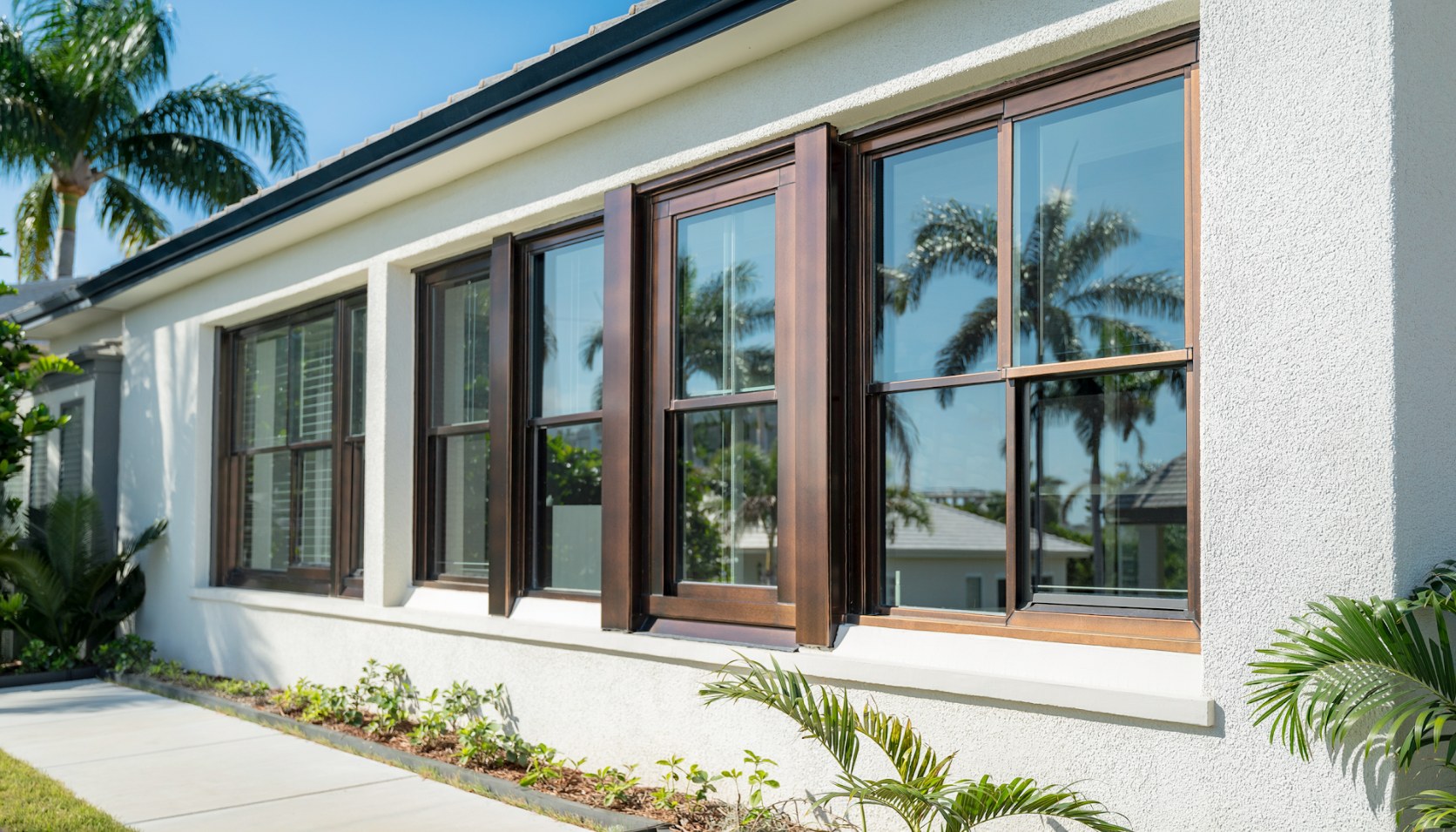
Choosing hurricane windows in Miami-Dade is not the same decision it would be almost anywhere else in the country. The entire county sits inside the strictest wind zone in Florida, which means the product that goes into your walls has to clear a higher bar before it can legally be installed. That changes what you should look for, what questions you should ask, and how you weigh one window against another. When you understand how the rules work here, you stop shopping on looks and price alone and start matching the right product to the way your specific home faces the storm. This guide walks through how to select hurricane windows Miami-Dade County homeowners can rely on, from the paperwork that proves a product qualifies to the frame and glass details that decide how the window actually behaves in a real event.
The goal here is not to hand you a list of rules to memorize. It is to help you make a confident selection. By the end you should be able to sit across from an installer, read the documents they show you, and know whether the window in front of you is genuinely suited to your address or simply looks the part. If you would rather have a licensed team walk your home and translate all of this into a clear recommendation, All America Construction Services offers that as part of a no-pressure assessment.
Why Miami-Dade Sits in the High Velocity Hurricane Zone
Florida divides the state into wind zones based on the strength of storms a region is likely to face. Miami-Dade and neighboring Broward fall into what the building code calls the High Velocity Hurricane Zone, usually shortened to HVHZ. This is the most demanding wind classification in the state, and it exists because South Florida has a long and painful history with catastrophic hurricanes. After Hurricane Andrew tore through the area in 1992 and exposed how poorly many homes were built, the code was rewritten to make sure that never happened the same way again. The HVHZ is the direct result of that reckoning.
What makes the HVHZ different is not just higher wind speed assumptions. It is the way products are tested and approved. In most of the country, a window that resists wind pressure is considered strong. In the HVHZ, a window also has to survive a physical impact, because flying debris is what actually breaks most homes open during a hurricane. A branch, a piece of a neighbor’s roof, or loose yard furniture becomes a projectile at storm wind speeds. Once a window shatters and the wind gets inside, pressure builds against the roof and walls from within, and that is when structures fail. The HVHZ rules are built around stopping that first breach.
For you as a homeowner, the practical takeaway is simple. Any window sold as hurricane protection for your Miami-Dade home has to meet the HVHZ standard, not just a general impact standard used elsewhere. A product might be perfectly legal and effective in another part of Florida and still fall short of what your county requires. That is why local approval documents matter so much, and it is the first thing a careful buyer learns to check.
What the NOA and Product Approval Actually Confirm
When you start comparing hurricane windows, two pieces of paperwork will come up again and again. The first is the Miami-Dade Notice of Acceptance, commonly called the NOA. The second is the Florida Product Approval. These are not marketing brochures. They are the official records that tell you a specific window, built a specific way, has been tested and cleared for use.
The NOA is issued by the Miami-Dade County product control division. It is the local seal of approval, and because Miami-Dade sets one of the toughest testing standards in the nation, an NOA carries real weight even beyond the county line. The document lists the exact product, the manufacturer, the sizes that were tested, the pressures the window can handle, and the installation methods that were validated. That last point matters more than most buyers realize. A window is only approved when installed the way the NOA describes, so the document effectively covers both the product and how it must be attached to your home.
The Florida Product Approval is the statewide equivalent. It confirms a product meets the broader Florida Building Code requirements. Many quality windows carry both an NOA and a statewide approval. In Miami-Dade, the NOA is the one that speaks directly to your local requirement, so it is the document you want to see for anything going into an HVHZ home. When an installer hands you these records, you are not just taking their word that a window is strong. You are looking at third-party verification that it passed the exact tests your county demands.
A good installer will not hesitate to show you these documents and point out the numbers that apply to your project. If a company is vague about approvals, cannot produce an NOA for the specific product, or tries to steer the conversation away from the paperwork, treat that as a warning. In a county built around the HVHZ standard, the documentation is not a formality. It is the whole basis for a legal, insurable, and genuinely protective installation.
How to Match Impact Rating and Design Pressure to Your Home
Passing the impact test is the entry ticket, but not every approved window is right for every opening in every home. This is where two technical terms become useful rather than intimidating: impact rating and design pressure. Understanding both is what turns a generic purchase into a proper selection.
The impact rating tells you the window survived debris strikes and the pressure cycling that follows. In the HVHZ, the demanding version of this is often called the large missile test, which involves firing a heavy object at the glass and then subjecting the window to thousands of pressure cycles that mimic a storm pushing and pulling on the opening for hours. A window that holds up has proven it can take a hit and keep the opening sealed. For a Miami-Dade home, large missile capability is the standard you should expect on windows within reach of ground-level debris.
Design pressure, often written as DP, describes how much wind load a window can carry before it fails, measured as positive pressure pushing in and negative pressure pulling out. Here is the part many homeowners miss. The design pressure a given opening needs is not one fixed number for the whole house. It depends on where the window sits. A window on an upper floor, on a corner of the building, or on a wall that faces open water or a wide clear exposure will see higher wind loads than a sheltered window low on a protected side. Corners and higher elevations take the worst of it. Matching the design pressure of the product to the calculated load for each opening is how a thoughtful installer makes sure no window is the weak link.
This is also why a blanket answer like “these are our strongest windows” is not enough. The right approach is a home that has been looked at opening by opening, with the exposure of each one considered. Two houses on the same street can call for different specifications depending on their height, orientation, surrounding structures, and proximity to open ground or water. A careful selection accounts for all of that rather than applying a single number everywhere.
The table below lays out the core terms you will encounter so you can follow the conversation and ask sharper questions.
Term | What It Means | Why It Matters in Miami-Dade |
NOA (Notice of Acceptance) | Miami-Dade’s official record that a specific product and its installation method passed local testing | It is the local proof a window is legal and validated for an HVHZ home, not just marketed as strong |
Design Pressure (DP) | The wind load a window can carry before failing, both pushing in and pulling out | It must be matched to each opening’s real exposure, since corners and upper floors face far higher loads |
Impact Rating | Confirmation the window survived debris strikes plus repeated storm pressure cycling | Debris breaks homes open first, so this rating is the difference between a decorative window and a protective one |
What Frame and Glass Choices Change
Once you know a window is approved and matched to the right pressure, the next layer of the decision is how it is built. Two windows can both carry an NOA and still perform, look, and age differently because of their frame material and glass construction. These choices affect not only storm performance but comfort, maintenance, and how the window fits your home over the years.
Frame material is the structural backbone of the window. In South Florida, the common choices are aluminum and vinyl, and each has a place. Aluminum frames are strong and slim, which allows more glass and a cleaner sightline, and they hold up well under high loads. Vinyl frames offer good insulation and do not corrode, which suits the humid, salt-laden coastal air. The right choice depends on the opening size, the look you want, and the exposure. Large spans and demanding elevations often lean toward aluminum for its strength, while some homeowners prefer vinyl for its thermal behavior on less demanding openings. A qualified installer will explain the trade-offs for your specific project rather than pushing one material for every situation.
The glass is where impact protection actually lives. Hurricane windows use laminated glass, which is two panes bonded to a tough interlayer in the middle, most often a material like polyvinyl butyral or a stronger ionoplast layer. When something strikes the glass, the outer pane can crack, but the interlayer holds the fragments together and keeps the opening sealed against wind and water. This is the same principle that keeps a car windshield from shattering into loose pieces. The thickness of the glass and the type and thickness of the interlayer influence how much abuse the window can absorb, which ties directly back to the impact and pressure requirements for each opening.
There is a comfort and efficiency angle here as well. Laminated impact glass blocks a large share of ultraviolet light, which helps protect flooring and furniture from fading. Many impact windows are also available as insulated units with two panes and a sealed air space, which improves how the window handles heat and noise. In a climate where the air conditioning runs most of the year and busy streets are common, those secondary benefits are real, even though the primary reason for the window is storm protection. When you weigh frame and glass options, it helps to think about the whole life of the window, not just the few hours of a storm.
How Hurricane Windows Fit a Whole Home Protection Plan
Windows are the most exposed openings on most homes, but they are one part of a larger system. A truly storm-resistant home treats the whole exterior as a single line of defense, because a hurricane will find the weakest point and exploit it. Choosing excellent windows and then ignoring the doors, roof, and other openings leaves a gap that undermines the investment. Thinking in terms of a whole home protection plan is how you get the full value from hurricane windows rather than a false sense of security.
The logic goes back to what happens when a home is breached. The entire purpose of impact-rated openings is to keep the building envelope sealed so wind cannot get inside and pressurize the structure. Every opening has to hold for that to work. That means impact-rated doors, including sliding glass doors and entry doors, deserve the same attention as windows. A beautiful set of hurricane windows next to an ordinary sliding door still leaves an obvious point of failure. Garage doors are another frequent weak spot, since a large door that buckles can let wind flood the interior in seconds.
The roof belongs in the same conversation. Wind pressure builds against the roof from below once the envelope is breached, so the roof and the openings work together. A home with strong impact windows and a roof that is nearing the end of its life is only as protected as its weakest component. This is why it helps to work with a contractor who can look at the whole exterior. All America Construction Services works across roofing, impact windows and doors, and related exterior systems, which means the recommendations can be coordinated instead of treating each element as an isolated purchase.
None of this means you have to do everything at once. Many homeowners phase the work, tackling the openings with the worst exposure first and building out from there. What matters is that the plan is deliberate. When you know how each piece fits the overall envelope, you can sequence the investment in a way that closes the biggest gaps first and steadily strengthens the whole home. A short checklist can help you keep the pieces in view as you plan.
• Impact-rated windows matched to each opening’s exposure and pressure requirement
• Impact-rated entry and sliding glass doors so no door becomes the weak point
• A reinforced or impact-rated garage door, a common failure point in high winds
• A roof in sound condition, since the roof and openings protect the envelope together
• Proper installation and sealing on every opening, since a product is only as good as its attachment
How to Read Frame, Glass, and Approval Details Together
By this stage you have three threads to pull together: the approval documents, the pressure and impact match, and the frame and glass build. The mistake many buyers make is treating these as separate checkboxes. In practice they interact, and reading them together is what leads to a sound choice. A window with an impressive frame but the wrong design pressure for a corner opening is still the wrong window. A perfectly matched pressure rating means little if the installer cannot show the NOA for that exact product and size.
A useful way to think about it is to start from your home and work outward to the product, rather than starting from a product and hoping it fits. Begin with the exposure of each opening, which sets the pressure and impact requirements. Then confirm that any product under consideration carries an NOA covering the sizes you need at the ratings you need. Only after that does it make sense to compare frame materials and glass packages, because now you are comparing options that have already cleared the requirements. This order keeps you from falling in love with a window that cannot actually do the job at your address.
It also protects you from a common sales tactic. When a product is presented as one-size-fits-all, the details that matter get glossed over. A window that is genuinely right for your home is one that has been selected against your home’s specifics, with documentation you can hold and numbers you can check. That is the difference between buying a window and choosing the right protection.
What to Confirm With Your Installer Before You Choose
The best product in the world underperforms when it is installed poorly, because the NOA covers the installation method as much as the window itself. That makes your installer a central part of the decision, not an afterthought once the window is picked. Before you commit, there are a handful of things worth confirming so you know the whole package is sound.
Ask to see the NOA for the specific products and sizes going into your home, and ask which design pressure applies to each opening. A capable installer will have looked at your exposures and be able to explain why one window carries a different rating than another. Confirm that they hold the proper Florida license and carry insurance, and that they will pull the required permits and have the work inspected, because a legal installation is part of what protects you and keeps the window’s approval valid. Ask how the windows will be anchored and sealed, since attachment and waterproofing are where real-world performance is won or lost.
It also helps to understand the timeline and warranty in plain terms. An honest contractor explains lead times, installation windows, and manufacturer coverage as ranges and clear conditions rather than promises that sound too tidy. Product availability, permitting, and inspection scheduling all vary, so a trustworthy answer acknowledges that variability instead of pretending every job runs on a fixed clock. When a company is upfront about how the process actually works, that candor tends to carry through to the quality of the installation itself.
Finally, look for a contractor who treats the selection as a consultation rather than a transaction. The right conversation is about your home, your exposures, and your priorities, not just a stack of brochures. When an installer takes the time to walk your openings, explain the documents, and match products to your specific situation, you end up with windows that fit the way your home faces the storm. That is the whole point of choosing carefully in a county where the standard is this high.
If you are weighing hurricane windows for your Miami-Dade home and want the paperwork, pressures, and product options translated into a clear recommendation, All America Construction Services can help. Our licensed team can assess your home opening by opening, show you the approvals that matter, and help you match the right windows to your real exposure as part of a coordinated protection plan. You can also explore our hurricane impact windows in Miami-Dade County to see how we approach these projects. Call (954) 225-6087 or email customerservice@allamericacs.com to schedule an assessment or consultation.
Frequently Asked Questions
Do all hurricane windows sold in Miami-Dade need a Notice of Acceptance?
Because Miami-Dade sits entirely in the High Velocity Hurricane Zone, windows installed here should carry a Miami-Dade Notice of Acceptance for the specific product and size. The NOA confirms the window and its installation method passed local testing. Ask your installer to show you the NOA for the exact products going into your home before you commit.
What is the difference between impact rating and design pressure?
The impact rating confirms a window survived debris strikes and repeated storm pressure cycling, while design pressure describes how much wind load the window can carry before failing. Both matter, and they serve different purposes. Impact rating addresses flying debris, and design pressure has to be matched to each opening’s actual exposure.
Why does the design pressure differ from one window to another in the same house?
Wind loads are not uniform across a home. Corners, upper floors, and walls facing open ground or water take far higher loads than sheltered, lower openings. A careful installer calculates the requirement for each opening and matches the design pressure accordingly, so no single window becomes the weak point.
Are aluminum or vinyl frames better for a Miami-Dade home?
Both can work well, and the right choice depends on the opening and your priorities. Aluminum is strong and slim, which suits large spans and demanding exposures, while vinyl resists corrosion and offers good insulation in humid coastal air. A qualified installer will weigh the trade-offs for each opening rather than applying one material everywhere.
Do I need impact doors and a roof upgrade if I install hurricane windows?
Hurricane windows work best as part of a whole home protection plan. The goal is to keep the building envelope sealed, so doors, garage doors, and the roof all matter alongside the windows. You do not have to do everything at once, but a deliberate plan that addresses the biggest gaps first protects your investment in the windows.
How do I know if an installer will do the job correctly?
Ask to see the NOA for your specific products, confirm the design pressure for each opening, and verify the company is licensed and insured and will pull permits and schedule inspections. Ask how the windows will be anchored and sealed, since attachment quality decides real-world performance. A trustworthy installer answers these questions openly and treats the process as a consultation.
Can hurricane windows help with anything besides storm protection?
Yes, though storm protection is the primary reason to install them. Laminated impact glass blocks much of the ultraviolet light that fades floors and furniture, and insulated units can improve how a home handles heat and outside noise. These are secondary benefits that come along with the main protective purpose in a demanding climate like South Florida.