

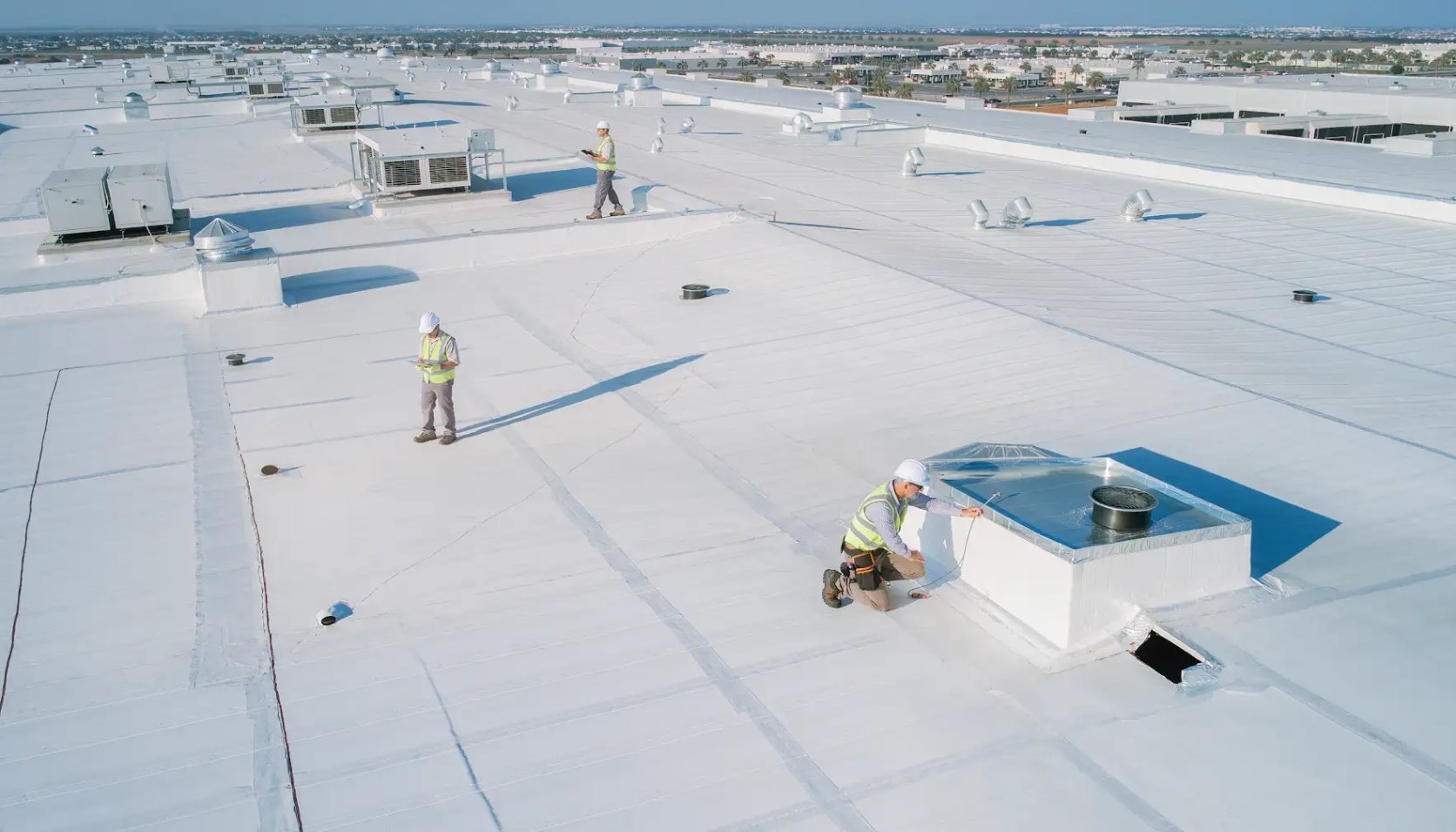
Quick Answer: A preventive maintenance plan protects a warehouse roof by catching small problems before they become leaks, wet insulation or storm damage. It sets a schedule of professional inspections, adds checks before and after hurricane season, and keeps photo records of every visit. For owners and facility managers, a written plan is the backbone of sound commercial roofing for warehouse in South Florida properties, because it turns roof care from reacting to leaks into planning ahead.
Most warehouse roofs fail slowly, then all at once. A clogged drain holds water for a few days after every storm, a seam opens a little each summer, a rooftop unit gets serviced and a panel screw is left lying on the membrane. None of these looks urgent on its own. Then a heavy afternoon storm finds the weak spot, water reaches the insulation and the deck, and the first sign anyone notices is a wet pallet or a stained ceiling tile over the office.
A preventive maintenance plan is the simple, written answer to that pattern. It names who looks at the roof, how often, what they check, how findings are recorded and how repairs are decided. The National Roofing Contractors Association (NRCA) describes roof maintenance as often the most neglected part of a roof management program, and as the most important factor after proper installation in how long a roof lasts and what it costs over its life. In South Florida, where sun, rain and wind all work on a roof at once, that point carries extra weight.
This guide is written for facility managers, property managers and owners of warehouses and distribution buildings across Broward, Miami-Dade and Palm Beach counties. It explains what a good plan covers on a low-slope warehouse roof, what a professional inspection looks at, and how the plan helps you decide between small repairs, restoration and replacement. If you want the problems themselves in more detail, our article on common commercial roof problems and how to avoid them covers them one by one.
Why Warehouse Roofs Need a Written Plan
Warehouse roofs are big, flat and mostly out of sight. Nobody walks past them on the way to work, and the people inside are focused on inventory, shipping and safety, not on the membrane overhead. That is exactly why they need a written plan. Without one, roof care tends to happen only when water comes through the ceiling, and by then the damage is usually larger than the leak suggests.
A low-slope roof also hides its problems well. Water can travel along the deck before it drips, so the stain inside may sit far from the opening on top. Wet insulation can stay wet for a long time, adding weight and losing its value, without anyone seeing it from below. Regular, planned inspections are the only reliable way to find these issues while they are still small and local.
The plan also protects the money already spent on the roof. A commercial roof system is one of the larger investments in a warehouse building, and most of its value is lost through slow, avoidable wear rather than one dramatic event. Clearing a drain, resealing a seam or replacing a cracked pipe boot costs little compared with drying out a wet deck or replacing soaked insulation across a large area. The plan simply makes sure those small jobs happen on time instead of waiting for the next leak to point them out.
A written plan also keeps the roof from depending on one person’s memory. Facility staff change, property managers change, and the contractor who installed the roof may not be the one who maintains it. A plan with clear steps, contacts and records means the roof keeps getting the same care no matter who is in charge that year.
Setting the Inspection Schedule and Scope
The heart of the plan is a schedule of professional inspections. Many roof manufacturers and roofing professionals recommend inspecting a low-slope roof on a regular schedule, with extra visits after major storms. In South Florida, a sensible pattern places one visit before hurricane season, one after it, and added visits after any named storm or severe weather event that passes nearby. Your roof warranty may also set its own inspection or maintenance terms, so read it and build the plan around them.
Each inspection should cover the whole roof in the same order every time, so nothing gets skipped and findings can be compared from visit to visit. The inspector should note the location of each issue on a roof plan, photograph it, describe what was found, and say whether it needs attention now, at the next visit, or in the longer term. That consistent format is what turns a pile of visits into a useful history.
It also helps to agree up front on what can be fixed during the inspection visit and what needs approval first. Small items, such as clearing a drain, resealing a minor flashing gap or removing loose debris, are often handled on the spot under a pre-approved limit. Larger items get written up with photos and a scope so the owner can decide. The table below shows how a typical warehouse roof inspection is organized.
Roof Area | What The Inspection Checks | Warning Signs |
Drains, scuppers and gutters | Clear flow, strainers in place, no debris or blockage at outlets | Standing water near drains, stains below scuppers, overflowing gutters |
Field membrane and seams | Membrane surface, seam bonds, blisters, cuts and punctures | Open or lifting seams, blisters, splits, worn or exposed areas |
Flashings and parapets | Base and wall flashings, coping, terminations and sealant | Pulled-back flashing, cracked sealant, loose or damaged coping |
Rooftop units and penetrations | Curbs, pipe boots, pitch pans, equipment attachment and panels | Gaps at curbs, loose access panels, debris left from service visits |
Walkways and traffic paths | Walkway pads, wear along service routes, impact damage | Scuffed or torn membrane, dents, punctures near ladders and hatches |
Interior and deck underside | Ceiling tiles, deck, joists and walls below the roof | New stains, rust on the deck, drips, damp insulation or odors |
Drains, Scuppers and Ponding Water
Water management is the first thing to protect on a low-slope roof. South Florida rain often arrives in short, heavy bursts, and a warehouse roof has to move a large volume of water to the drains and scuppers quickly. When an outlet is partly blocked, water backs up, adds weight to the structure and sits against seams and flashings that were not meant to stay underwater.
The plan should name every roof drain, scupper, gutter and downspout and include them in every inspection. Strainers and drain domes should be in place and clear of leaves, sand, plastic wrap and debris that blows up from the yard. Overflow scuppers, where the building has them, should be open, since they are the backup if a primary drain clogs during a storm.
Ponding water, meaning water that stays on the roof long after rain stops, deserves its own note in every report. It can point to a clogged drain, a low spot in the deck, settled or crushed insulation, or a roof that was not built with enough slope. Small areas may be fixed with added drainage or tapered insulation during a later project, while larger patterns are a signal to look closer at the roof’s overall condition.
What Staff Can Watch for From the Ground and Inside
Facility staff do not need to go on the roof to help the plan. From the ground, they can watch whether gutters overflow and whether scuppers discharge normally during heavy rain, and note any streaks or stains on the walls below them. Inside, they can report new ceiling stains, drips, rust on the underside of the deck, or damp smells in storage areas. Roof access should be left to trained, properly equipped professionals, and staff reports simply give the inspector a head start on where to look.
Seams, Membrane, Flashings and Parapets
Most warehouse roofs in South Florida use a single-ply membrane, such as TPO or PVC, a modified bitumen system, or a coated roof over an older system. Each one has seams, edges and terminations, and those are where leaks usually start. Heat, ultraviolet light and daily expansion and contraction stress the seams, while ponding water and foot traffic wear on the surface.
An inspection checks the field of the membrane for blisters, splits, punctures, shrinkage and worn areas, and checks the seams for any spot that has opened or lifted. On older roofs, the inspector also looks for areas where the surface has weathered thin or where earlier repairs have started to fail. Each finding gets a location and a photo so it can be repaired and then confirmed on the next visit.
Flashings and parapets deserve close attention because they sit at the joint between the roof and the walls, where movement is greatest. Base flashings can pull away from the wall, sealant at terminations can crack, and metal coping on top of the parapet can loosen or let water into the wall. Under the Florida Building Code, roof edges and copings have to resist wind uplift, so a loose section of coping is both a leak risk and a wind risk before a storm.
Parapet Walls and Roof Edges
Parapet walls often hide slow leaks. Water that gets behind the flashing or under the coping can run down inside the wall and show up as staining on an interior wall rather than on the ceiling. The plan should include the coping, the counterflashing and the wall surface above the roof, and inspectors should check edge metal on roofs without parapets as well, since a lifted edge is often where wind damage starts in a storm.
Rooftop Units, Penetrations and Foot Traffic
Rooftop equipment brings both leak points and traffic. Every HVAC unit, exhaust fan, pipe, conduit and vent needs a curb, boot or flashing that keeps water out, and every service visit brings people and tools onto the roof. Penetrations are among the most common leak sources on commercial roofs, and many of the problems start during work that has nothing to do with the roof itself.
The plan should list each rooftop unit and penetration and include them in every inspection. Inspectors check curbs and boots for gaps, look for loose access panels that could become wind-borne debris, and confirm that equipment is still attached as it should be. Equipment on South Florida roofs has to be secured against wind under the Florida Building Code, so anything that has shifted or lost fasteners should be reported to the mechanical contractor right away.
Foot traffic is the quiet cause of a lot of damage. Dropped screws, sharp tools and heavy equipment wear and puncture membranes, especially near ladders, hatches and the units that get serviced most. Walkway pads along the regular service routes protect the membrane, and a simple roof access log helps the owner know who was on the roof and when. Asking service contractors to report any damage they cause, and to carry their debris off the roof, prevents many small punctures from becoming leaks.
Before and After Hurricane Season
Atlantic hurricane season runs from June through November, and South Florida warehouses should treat it as a fixed part of the maintenance calendar. A pre-season inspection is the most valuable visit of the year. It clears drains before the heavy rains, secures loose coping and edge metal, tightens access panels and checks equipment attachment, and closes open seams before wind-driven rain can find them.
The pre-season visit is also the time to confirm the basics of the response plan. Who calls the roofing contractor after a storm, who has access to the building and roof hatch, where the roof plan and records are kept, and which areas inside hold the most sensitive inventory. Having those answers written down saves hours when the whole region is calling contractors at once.
The Post-Storm Walkthrough
After a named storm or any severe weather, a professional walkthrough checks for lifted membrane, damaged flashings, displaced coping, punctures from wind-borne debris, and equipment that has moved. Photos taken before the season make it much easier to show what changed. Inside, staff should check for new leaks and move inventory away from any active drip while the roof is assessed.
Records, Photos and Warranty Terms
The records a maintenance plan produces are worth almost as much as the repairs. Each inspection report should include the date, a roof plan with marked findings, dated photos, a short description of each issue, what was repaired, and what was recommended. Kept together over the years, those reports show the roof’s real condition and history, which helps every later decision.
Records also matter for the roof warranty. Many manufacturer warranties on commercial roof systems expect the owner to maintain the roof, keep drains clear and report leaks promptly, and some ask for proof of maintenance. Read your warranty’s maintenance terms and keep the reports, invoices and photos that show you met them. A clear file also helps if you ever need to document storm damage for a claim, although the outcome of any claim is up to the insurer, not the roofer or the owner’s paperwork alone.
One practitioner note from our crews on South Florida warehouses. The roofs we see in the worst shape are rarely the oldest ones. They are usually roofs where drains were left to clog, rooftop service debris piled up, and small seam openings went unnoticed for several seasons. Roofs of similar age that had regular inspections and quick small repairs tend to give their owners far more choices when it comes time to plan the next big step.
Small Repairs, Restoration or Replacement Planning
A maintenance plan does not only keep the roof patched. Over time, its records show which of three paths fits the roof. Small repairs suit a roof that is sound overall with isolated issues, such as a few open seams, a damaged boot or a section of loose flashing. These are the routine fixes a good plan handles visit by visit.
Restoration may fit a roof whose membrane is aging across the field but still largely sound, with dry insulation underneath. In those cases, a contractor may recommend cleaning, repairing the weak spots and applying a restoration coating system, such as a silicone or acrylic coating, to extend the roof’s service. Whether restoration is suitable depends on a careful look at the existing roof, often including a moisture survey, because coating over wet insulation traps the problem instead of solving it.
Replacement planning begins when the records show widespread wet insulation, repeated failures in the same areas, or a membrane that has reached the end of its useful life. A plan that sees this coming gives the owner time to set a budget, schedule the work for the best season, and compare systems calmly instead of deciding under pressure after a major leak. Our guide to planning a flat roof replacement on a home covers the residential side of low-slope replacement, and many of the same drainage and detailing points apply to warehouse roofs.
Budgeting by Condition
The most useful way to budget for a warehouse roof is by condition, not by guesswork. After each inspection, sort the findings into items to fix now, items to watch and fix at the next visit, and items to plan for in the coming years. That simple sorting turns roof spending into planned line items, makes surprise costs less likely, and gives owners a clear basis for deciding when restoration or replacement belongs in the capital plan.
Keeping the Warehouse Running During Roof Work
Roof work on an active warehouse has to fit around operations. Good commercial roofing contractors plan the work in sections, stage materials away from loading docks and traffic lanes, and agree with the facility manager on working hours, access routes and safe zones on the ground. Most routine maintenance and repairs happen entirely on the roof and cause little disruption, but larger projects need a clear plan for each phase.
Before larger work starts, agree on how the roof will be kept watertight at the end of each day, how sensitive inventory below the work area will be protected, and who on each side is the point of contact. Rooftop units may need to be shut down briefly or protected while work goes on around them, so coordinate with the mechanical contractor ahead of time. A short daily check-in keeps the project moving without surprises for the people working below.
Across Fort Lauderdale, Pompano Beach, Miami, Hollywood and West Palm Beach, many warehouses run long hours, and some never fully stop. A contractor who understands that will build the schedule around your shipping peaks, not around their own convenience. That planning is part of commercial roof maintenance done well, not an extra.
A Simple Warehouse Roof Maintenance Checklist
Use this checklist to set up or review the preventive maintenance plan for your building.
• Keep a current roof plan showing every drain, scupper, rooftop unit and penetration.
• Schedule professional inspections on a regular cycle, including one before and one after hurricane season.
• Add an inspection after any named storm or severe weather that passes near the building.
• Ask staff to report overflowing gutters, ceiling stains, drips and deck rust, and keep them off the roof.
• Set a pre-approved limit for small repairs during inspection visits.
• Keep a roof access log and ask service contractors to report damage and remove debris.
• File every report, photo and invoice together, and read the warranty’s maintenance terms.
• Sort findings into fix now, watch and plan ahead, and update the budget after each visit.
If your warehouse roof has no written maintenance plan, or it has been a while since anyone looked at it closely, All America Construction Services can help. Call (954) 225-6087 to schedule a professional roof inspection, and we will document what we find with photos and a clear report. You can also learn more about our commercial roofing services for South Florida buildings before your visit.
Frequently Asked Questions
How often should a warehouse roof in South Florida be inspected?
Most warehouse roofs benefit from professional inspections on a regular schedule, with one visit before hurricane season and one after it as a sensible base. Add an inspection after any named storm or severe weather nearby. Your roof warranty may set its own maintenance terms, so read it and match the schedule to it. Buildings with heavy rooftop equipment traffic may need more frequent visits.
What does a commercial roof maintenance visit usually include?
A typical visit covers drains and scuppers, the membrane surface and seams, flashings, parapets and edges, rooftop units and penetrations, and walkway areas. The inspector photographs each finding, marks it on a roof plan and notes whether it needs attention now or later. Small items are often fixed during the visit under a pre-approved limit. Larger items are written up so the owner can decide.
Can my maintenance staff check the roof themselves?
Staff can help a great deal without going on the roof. From the ground they can watch gutters and scuppers during rain, and inside they can report stains, drips and rust on the deck. Roof access should be left to trained professionals with the right safety equipment. Staff reports help the inspector know where to look first.
Why is standing water on a flat warehouse roof a concern?
Water that stays on the roof long after rain adds weight to the structure and keeps seams and flashings underwater. Over time it can speed up wear on the membrane and find its way through small openings. It often points to a clogged drain, a low spot or crushed insulation. An inspection can tell which one and what the fix should be.
Does a maintenance plan help with my roof warranty?
It can. Many commercial roof warranties expect the owner to maintain the roof, keep drains clear and report leaks promptly. Dated reports, photos and invoices show that you met those terms. Read your specific warranty, since each one sets its own conditions.
When should a warehouse roof be coated instead of replaced?
A restoration coating may fit when the membrane is aging but still largely sound and the insulation below is dry. A contractor usually checks for moisture first, because coating over wet insulation traps the problem. If the records show widespread wet areas or repeated failures, replacement planning is often the better path. The inspection history from your maintenance plan helps make that call clearly.
How can roof work be scheduled without shutting down the warehouse?
Most maintenance and small repairs happen on the roof and cause little disruption. For larger projects, the contractor works in sections, stages materials away from docks and traffic lanes, and agrees on hours and access with the facility manager. Inventory below active work areas should be protected, and rooftop units coordinated with the mechanical contractor. A daily check-in keeps everyone informed.