

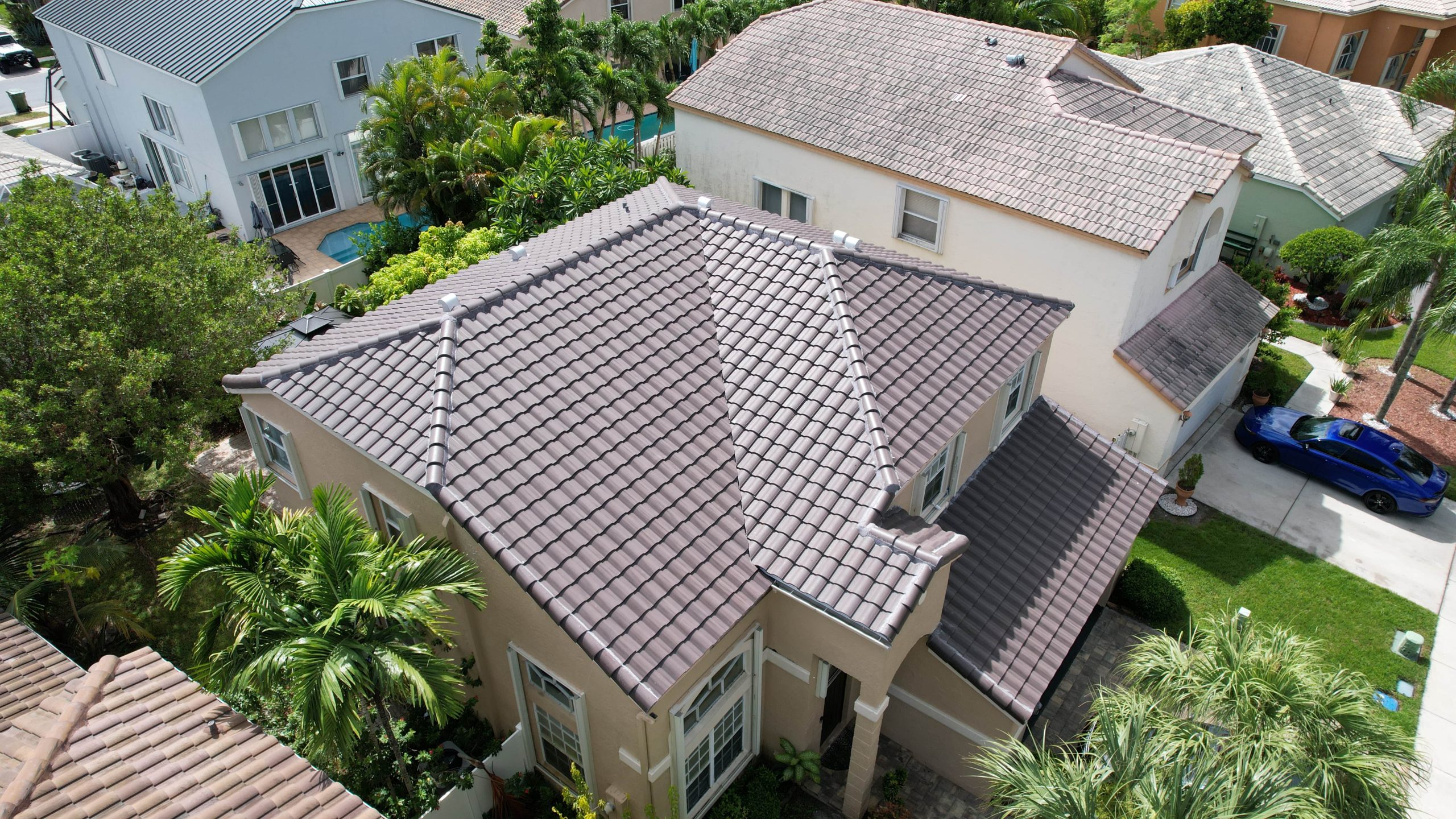
A tile roof can look almost permanent. The tiles are heavy, they resist sun and wind, and many of them are still sitting exactly where they were installed decades ago. That durable appearance is exactly what makes tile roofs so easy to misread. Homeowners see intact tiles and assume the roof is sound, when the part of the system actually keeping water out of the house may be quietly failing underneath. That hidden layer is the underlayment, and when it begins to break down, the tiles above it can stay beautiful while the roof itself stops doing its job.
For South Florida homeowners, this gap between appearance and condition is where a lot of expensive surprises begin. A leak shows up in the ceiling after a heavy storm. A few tiles are replaced. The leak comes back. The cycle repeats until someone finally looks past the tiles and finds that the underlayment has aged out across a wide area. By then the decision is no longer a small repair. It has become a much larger repair or replacement conversation that could have been planned for earlier if the underlayment had been taken seriously the first time.
This article is for the homeowner who has a tile roof that is aging, leaking, or simply old enough to raise questions. The goal is to explain why underlayment is the real decision driver beneath a tile roof, how to recognize the signs that it may be involved, why South Florida conditions accelerate the problem, and what a thorough inspection should actually examine. If your roof is reaching that stage, a professional review through experienced roofing companies in Broward County is the step that turns guesswork into a clear plan.
Why Underlayment Is Critical Beneath a Tile Roof
Most people think of a tile roof as a single thing, but it is really a layered system. The tiles are the visible, weather-facing layer, and they do important work. Underneath them sits the underlayment, a waterproofing membrane installed over the roof deck. Understanding the difference between these layers is the key to understanding why a roof can look fine and still leak.
Tile Sheds Water, but Underlayment Protects the Structure
Tiles are designed to shed the majority of rainwater and to take the direct impact of sun, wind, and debris. They are the first line of defense, and they handle it well. What tiles do not do is form a continuous waterproof seal. Water can and does get past tiles, especially during wind driven rain, and the layer that catches that water and directs it safely off the roof is the underlayment. In other words, the tiles protect the underlayment, and the underlayment protects the home. When the underlayment is healthy, the small amount of water that slips past the tiles is handled without any sign inside the house. When the underlayment has degraded, that same water finds its way to the deck, the framing, and eventually the ceiling.
This is why the underlayment condition matters so much more than the tile condition when a leak appears. A homeowner can replace cracked tiles all day, but if the membrane beneath them has dried out, torn, or lost its seal around penetrations, the water still gets through. The visible repair feels productive, but it does not address the layer that actually stopped working.
A Roof Can Look Attractive While the Underlayment Is Failing
One of the hardest things for homeowners to accept is that curb appeal and waterproofing are not the same thing. A tile roof can present beautifully from the street, with clean lines and intact tiles, while the underlayment beneath it is at the end of its service life. Underlayment ages on its own timeline, affected by heat, moisture, and the quality of the original installation, and that timeline is often shorter than the lifespan of the tiles themselves. A roof that is twenty or more years old may still wear its original tiles proudly while the membrane underneath has become brittle and is no longer sealing.
The practical takeaway is that a visual check of the tiles tells you very little about whether the roof is still waterproof. The questions that matter are about the layer you cannot see from the ground, and answering them takes a closer, professional look rather than a glance from the driveway.
A tile roof system generally includes several working parts that an inspection should consider together:
- The tiles themselves, which shed weather and protect the layers below.
- The underlayment membrane, which provides the actual waterproofing barrier.
- The roof deck or sheathing, which gives the system its structural base.
- Flashings at valleys, walls, chimneys, and penetrations, where leaks frequently start.
- Fasteners and battens that hold the system in place against wind.
Signs Underlayment May Be Part of the Problem
Underlayment problems rarely announce themselves directly, because the membrane is hidden. Instead, they show up as patterns that a homeowner can learn to recognize. None of these signs is a diagnosis on its own, but together they point toward a roof system that needs more than a surface repair.
Leaks After Heavy Rain or Wind Driven Storms
One of the clearest indicators is a leak that appears specifically after heavy rain or storms with strong, wind driven moisture. Wind driven rain is exactly the condition that pushes water past the tiles and onto the underlayment. If the membrane is intact, nothing happens inside. If a leak shows up in those conditions, it suggests the underlayment is no longer catching and redirecting that water as it should. A leak that recurs after each significant storm, in the same area or in new ones, is a strong sign that the issue is below the tiles rather than at the surface.
Recurring moisture patterns deserve particular attention. A single leak from one obvious cause may be a simple repair. A leak that returns after a repair, or moisture that appears in several places over time, points to a system level issue. This is the moment when a homeowner should stop replacing individual tiles and start asking what the underlayment is doing.
Cracked or Slipped Tiles With Staining Below
Visible tile damage matters most when it appears alongside signs of moisture underneath. Cracked, broken, or slipped tiles create openings that let more water reach the underlayment, accelerating wear in those areas. When that tile damage is paired with staining on the ceiling below, on the underside of the roof in the attic, or along the walls near the roofline, the combination suggests the water is not only getting in but is also no longer being stopped by the membrane. These are the visible indicators that should prompt a professional review rather than another quick patch.
Visible Symptom | Possible Hidden Underlayment Issue | Suggested Response |
Leak only after wind driven rain | Membrane no longer redirecting water past tiles | Professional underlayment review |
Leak returns after tile replacement | Underlayment failure, not tile failure | System inspection, not surface repair |
Ceiling or attic staining under intact tiles | Water reaching deck through aged membrane | Moisture and decking evaluation |
Cracked or slipped tiles with staining below | Accelerated underlayment wear in that zone | Targeted assessment and scope review |
Multiple leak areas over time | Widespread underlayment aging | Replacement planning conversation |
How Underlayment Issues Change the Repair Scope
The reason underlayment matters so much in planning is that it changes what a repair actually needs to accomplish. A roof problem that looks like a tile problem and a roof problem that is really an underlayment problem call for very different scopes, and confusing the two leads to wasted money.
Replacing Tiles May Not Stop the Leak
When the underlayment is the source of the problem, replacing tiles is treating a symptom. The new tiles may look better and may even reduce water intrusion slightly, but the membrane that failed is still failing. Homeowners often go through several rounds of tile replacement before realizing that each repair addressed the visible layer while leaving the waterproofing layer untouched. The leak persists because the actual barrier was never restored. Recognizing this early saves both the cost of repeated repairs and the frustration of a problem that never quite goes away.
Larger Sections May Need Evaluation
Underlayment tends to age across areas rather than at a single point, because the whole membrane is exposed to similar heat and moisture conditions. That means a problem in one section often signals similar wear in adjacent areas. A careful contractor will evaluate whether the issue is genuinely localized, in which case a targeted restoration of that section may be appropriate, or whether the surrounding underlayment is showing the same age and condition, which points toward a broader replacement conversation. This is not about defaulting to the largest possible job. It is about matching the scope to the real condition so the homeowner is not back in the same position a year later.
Why South Florida Weather Accelerates Roof System Wear
Underlayment ages everywhere, but South Florida conditions push that aging faster than many other climates. Understanding why helps homeowners appreciate that a tile roof here may reach the underlayment decision sooner than expected.
Heat, Humidity, and UV Exposure
The combination of intense sun, high heat, and persistent humidity is hard on roofing materials. Underlayment beneath tile is subjected to significant heat that builds up under the tiles during long, hot days. Over years, that heat dries out and embrittles many membrane materials, reducing their flexibility and their ability to seal. Ultraviolet exposure adds to the stress wherever the membrane is even partially exposed. Humidity keeps moisture present in the system more consistently than in drier climates. None of these forces is dramatic on any single day, but together, over years, they wear the underlayment down steadily. A membrane that might last longer in a mild climate can reach the end of its useful life sooner here.
Hurricanes and Storm Debris
South Florida also brings sudden, severe events that can expose weak layers quickly. Hurricane winds drive rain into the roof system with force that ordinary weather never produces, testing the underlayment exactly where it is most vulnerable. Flying debris can crack or dislodge tiles, removing the protection above the membrane and accelerating wear in those spots. A roof that was quietly aging can be pushed past its limit by a single major storm, turning a slow decline into an active leak. This is why post storm inspections matter so much, and why a roof that came through a storm looking intact may still have suffered damage to the layers that are not visible from the ground.
What a Contractor Should Inspect Before Recommending Work
Because underlayment is hidden, a meaningful inspection has to look at the whole roof system and at the signs inside the home, not only at the tiles. A homeowner choosing among roofing companies in Broward County should expect a process that goes deeper than a surface glance.
Tiles, Flashing, Valleys, Penetrations, and Decking
A thorough review examines the tiles for cracks, slippage, and wear, but it does not stop there. Flashings at valleys, walls, chimneys, and roof penetrations are common starting points for leaks and deserve close attention, because failures there often mimic or accelerate underlayment problems. Valleys carry concentrated water flow and are especially prone to wear. Penetrations such as vents and pipe boots are frequent leak sources. Where it can be assessed, the condition of the decking beneath matters too, since prolonged moisture exposure can soften or damage the structural base. Looking at these elements together allows a contractor to distinguish a localized flashing repair from a deeper underlayment issue.
Moisture Indicators Inside the Home
Some of the most useful evidence is found inside rather than on the roof. Stains on ceilings, discoloration on interior walls near the roofline, and signs of moisture in the attic all help locate where water is getting through and how far it has traveled. Attic inspection, where access allows, can reveal staining on the underside of the deck and moisture patterns that point back to specific roof areas. These interior indicators, reviewed at a planning level rather than treated as a diagnosis, help build an accurate picture of what the roof system is actually doing and where the underlayment may have failed.
How to Avoid Repeated Tile Roof Repairs
The homeowners who escape the cycle of repeated tile roof repairs are usually the ones who change the questions they ask. Instead of focusing only on the visible damage, they focus on the cause.
Ask What Caused the Leak
The single most valuable question a homeowner can ask a contractor is what actually caused the leak, not just what will be replaced. A response that only describes which tiles will be swapped has not addressed the root cause. A response that explains where the water entered, why it reached the interior, and what condition the underlayment appears to be in reflects a contractor who is diagnosing the problem rather than patching it. Root cause thinking is what prevents the same leak from returning after the next storm.
Do Not Compare Estimates Only by the Number of Tiles Replaced
When comparing estimates, homeowners often default to the simplest metric, which is how many tiles each contractor proposes to replace or how low the price is. This comparison misses the point entirely if underlayment is the issue. A low estimate that only replaces tiles may be more expensive in the long run than a higher estimate that addresses the membrane, because the cheaper option leaves the real problem in place. The better comparison looks at scope quality, whether underlayment condition is being evaluated, and whether the proposed work actually matches the cause of the leak. A genuine tile roof installation Broward County specialist will explain these distinctions rather than competing only on tile count.
Before calling a contractor, a homeowner can prepare with a short checklist that makes the inspection more productive:
- Note when leaks appear, especially whether they follow heavy or wind driven rain.
- Photograph any ceiling stains, wall discoloration, or attic moisture, with dates.
- List previous tile repairs and whether the leaks returned afterward.
- Record the approximate age of the roof and any known history of the underlayment.
- Identify rooms or areas where moisture or musty odors have appeared.
- Gather any prior inspection reports or roofing documents you still have.
How All America Construction Services Can Help Evaluate Tile Roof Underlayment
All America Construction Services approaches tile roof concerns as a system question rather than a tile question. The goal of an evaluation is to determine whether the issue is a localized repair, a flashing or penetration problem, or a broader underlayment condition that calls for a larger plan. That clarity is what allows a homeowner to make a confident decision instead of guessing.
Professional Review Before Repair or Replacement
The team examines the full roof system, including tiles, flashings, valleys, penetrations, and the moisture indicators visible inside the home, and produces findings the homeowner can understand. The recommendation that follows is tied to what was actually observed. Sometimes the answer is a targeted repair. Sometimes it is a restoration of a section where the underlayment has aged. Sometimes it is a replacement conversation that should happen now rather than after another year of repeated leaks. The point is that the recommendation reflects the real condition of the membrane and the system, not just the surface.
Clear Next Steps for Tile Roof Planning
If your tile roof is leaking, aging, or simply old enough to raise questions about the underlayment, the next step is a professional inspection that looks past the tiles. Reach out to All America Construction Services to schedule a tile roof assessment, receive clear findings, and use them as the basis for a repair or replacement decision that addresses the cause rather than the symptom. Acting before the next major storm gives you the time to plan the work deliberately instead of reacting to an active leak.
Frequently Asked Questions
What does underlayment do on a tile roof?
Underlayment is the waterproofing membrane installed beneath the tiles and over the roof deck. The tiles shed most of the weather, but they do not form a continuous seal, so some water gets past them, especially during wind driven rain. The underlayment catches that water and directs it safely off the roof. When it is healthy, the home stays dry. When it fails, water reaches the deck and the interior even if the tiles look fine.
Can tile roof underlayment fail even if the tiles look fine?
Yes, and this is one of the most common misunderstandings about tile roofs. Tiles can last much longer than the underlayment beneath them, so a roof can present beautifully from the street while the membrane has dried out, become brittle, or lost its seal. Because the underlayment does the actual waterproofing, its condition matters more than the appearance of the tiles when a leak is involved.
How do I know if a tile roof leak is from the underlayment?
Strong signs include leaks that appear after heavy or wind driven rain, leaks that return after tiles have been replaced, and ceiling or attic staining beneath tiles that still look intact. None of these confirms the cause on its own, but together they point toward an underlayment issue. A professional inspection that reviews the tiles, flashings, penetrations, and interior moisture indicators is the reliable way to confirm it.
Can underlayment problems be repaired without replacing the whole roof?
Sometimes. If the issue is genuinely localized and the surrounding membrane is still in good condition, a targeted restoration of that area may be appropriate. If the underlayment is aging across the roof, repairs in one area often precede similar problems elsewhere, which points toward a broader plan. A careful inspection determines which situation applies rather than defaulting to either extreme.
Should tile roof underlayment be checked after storms?
Yes. Hurricane winds and storm debris can crack or dislodge tiles and drive water into the system with unusual force, which can expose or accelerate underlayment wear. A roof that looks intact after a storm may still have suffered damage to the layers that are not visible from the ground. A post storm inspection helps catch these issues before they become active leaks.
Does All America Construction Services inspect tile roofs?
Yes. The team performs tile roof evaluations across South Florida, reviewing the full roof system and the moisture indicators inside the home, then provides findings and recommendations tied to what was actually observed. The aim is to give the homeowner enough information to choose between repair, restoration, or replacement with confidence.
How do I request a tile roof evaluation?
Contact All America Construction Services to schedule an inspection. The visit reviews the tiles, flashings, valleys, penetrations, and accessible moisture indicators, and produces a written summary that supports the next decision. From there, the path forward becomes a planned conversation about your tile roof rather than another temporary patch.