

Walk into any window showroom in South Florida and you will hear both terms used almost interchangeably. Impact windows. Hurricane windows. Hurricane impact windows. Storm windows. Wind-rated windows. The labels move so freely that a homeowner researching an upgrade can leave a single afternoon of conversations unsure whether they are looking at one product or several. That confusion is not accidental. The window industry uses both technical and marketing language in the same sentence, and for most homes the terms do point to the same general category. But “most” is doing important work in that sentence. There are real cases where what a salesperson calls “hurricane windows” is not quite what an impact rating actually delivers, and homeowners who buy by the name alone occasionally end up with a product that does not match what they thought they were getting.
This article exists to settle the question in plain language. It explains why the two terms exist, where they mean the same thing, where they can quietly diverge, what the documentation should actually show, and how to make sure the product you install matches the protection your home needs. The aim is a homeowner who can walk into the next consultation knowing exactly what to ask, what to look for on the paperwork, and how to recognise the difference between a true impact-rated installation and a similar-sounding but weaker product. If you are planning a window upgrade in a high-exposure area, an experienced team handling impact windows installation Broward County homeowners trust is the right starting point.
The Short Answer and Why the Details Still Matter
For most South Florida purchases, “impact windows” and “hurricane windows” describe the same class of product. The two names usually refer to a window with an impact-rated laminated glass package, a reinforced frame, and the anchoring system needed to keep the assembly in place during a storm. So a homeowner who walks in asking for hurricane windows and a homeowner asking for impact windows often leave with the same product. The reason this article exists is the gap between “often” and “always.”
Why the Industry Uses Both Terms
The two terms come from different conversations. “Impact” is the technical language used in building codes, product approvals, and engineering reports. It describes what the window is rated to resist, with specific testing for windborne debris and pressure cycling. “Hurricane,” on the other hand, is the marketing language used in advertising, showrooms, and homeowner-facing material because it answers the question most buyers actually have: will this window protect my home in a storm? Both terms point toward the same outcome for most products, but the conversations behind them are not identical, and that gap is where occasional confusion creeps in.
Where the Confusion Can Cost a Homeowner
The confusion costs homeowners when a product called “hurricane-rated” turns out to mean something less than fully impact-rated, or when a salesperson markets storm shutters as part of a “hurricane windows” package without making clear that the windows themselves are ordinary. In high-exposure zones in Miami-Dade County and Broward County, that distinction is not academic. Building codes and insurance considerations both depend on what the window itself is rated to do, not on what the brochure called it. Knowing the difference between marketing language and product approval is the protection against that mismatch.
What “Impact” Actually Means in a Window
Understanding the technical side does not require an engineering degree. A handful of concepts cover most of what a homeowner needs to know to read a product approval intelligently.
Laminated Glass with an Inner Membrane
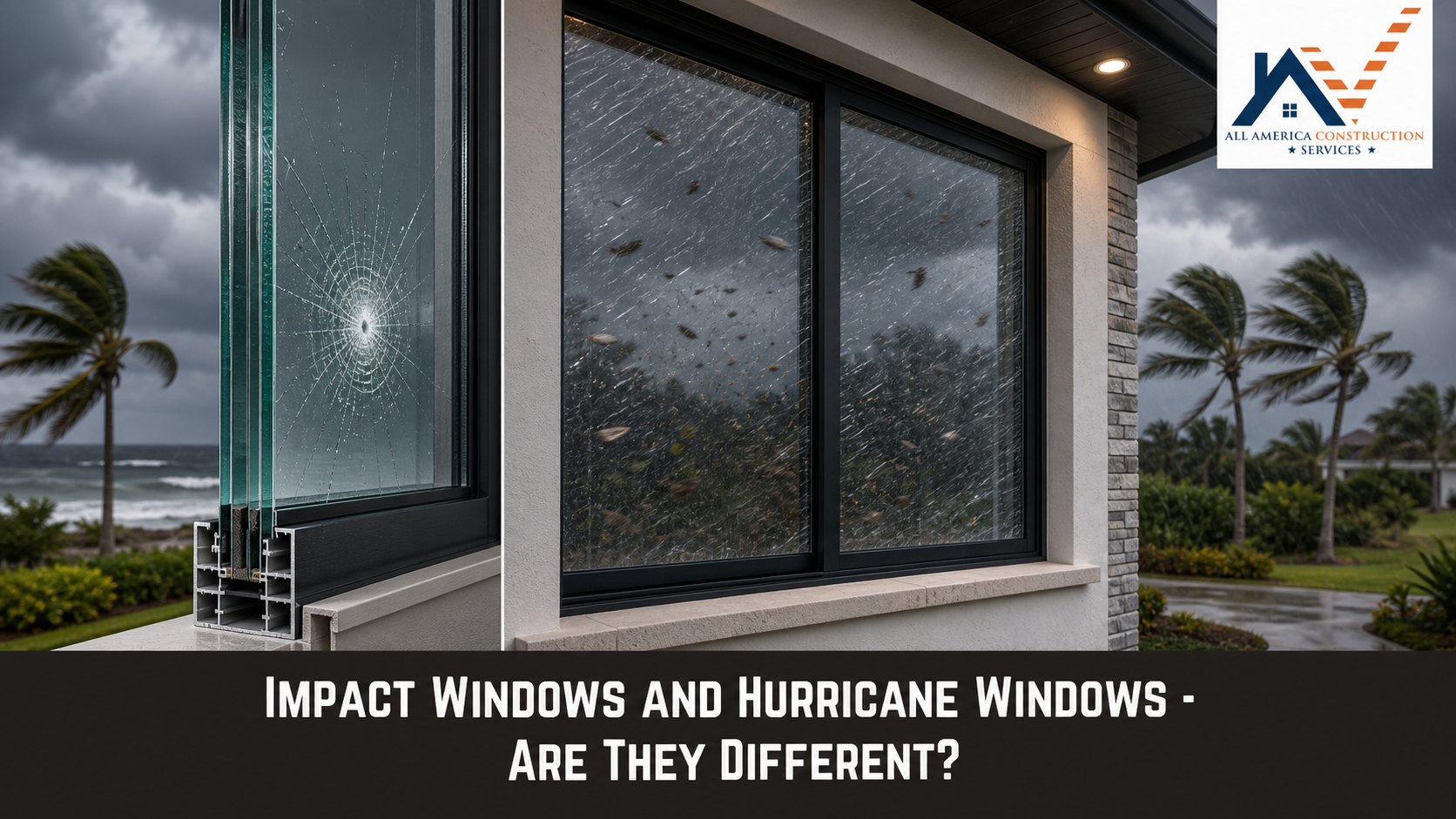
An impact-rated window has laminated glass, which is two layers of glass bonded to a tough inner membrane. When an object strikes the window during a storm, the outer glass may crack, but the membrane holds the fragments in place and keeps the wall opening sealed. That intact opening is the whole point. A breached opening in a hurricane is what allows internal pressurisation, roof lift, and a chain of structural damage that can dwarf the cost of the window itself. A standard double-pane window without a laminated layer can shatter cleanly on impact, leaving the home open to wind and water; an impact-rated window resists that failure mode by design.
Frame Strength, Anchors, and Pressure Ratings
Glass is only part of the story. The frame, the way it connects to the wall, and the pressure rating of the whole assembly all decide whether the window stays in place when wind loads test it. Impact-rated assemblies are tested under simulated debris impacts and then under repeated pressure cycling to confirm the frame and anchoring hold up after the glass is hit. A window labelled impact-rated but installed into a weak opening with light fasteners can underperform its rating, which is why installation quality is part of the protection, not a separate detail.
Where “Hurricane” Enters the Picture
The word “hurricane” attaches to windows for understandable reasons. It is the threat most South Florida homeowners are thinking about when they upgrade their windows. But the term is broader than the technical impact rating, and that breadth is what creates the room for mismatched expectations.
Why Marketing Uses the Hurricane Label
Hurricane is a plain, urgent language that a homeowner immediately understands. “Hurricane windows” sounds like the answer to the storm-protection question, and for impact-rated products it generally is. The challenge is that the same word can be used loosely. A window described as “hurricane-rated” might mean impact-rated, but it might also mean wind-pressure-rated without true impact testing, or it might refer to a package that includes shutters rather than impact glass. The label alone does not tell a homeowner which version they are looking at.
The HVHZ Context That Sets Florida Apart
Parts of South Florida sit inside the High-Velocity Hurricane Zone, which carries the most demanding wind and impact requirements in the country. In Miami-Dade County in particular, products approved for use in those zones go through specific testing and carry a Notice of Acceptance that documents what they have been tested for. For homeowners shopping for hurricane windows Miami-Dade County properties demand those approvals are not a marketing claim, they are the documentation that proves the product meets the local standard. Reading them, or having a contractor explain them clearly, is the most direct way to know what protection a window genuinely offers.
Where the Two Terms Can Quietly Diverge
For most products sold in South Florida, “impact windows” and “hurricane windows” really do describe the same thing. But a careful homeowner should know the situations where the two names can drift apart, because those are the places where buying by name alone leaves room for surprises.
Storm Shutters Are Not Impact Windows
Storm shutters are protection devices installed over windows. They include roll-down shutters, accordion shutters, panel shutters, and similar products. Done properly, they can provide hurricane protection for a home with non-impact windows. But shutters are a different category from impact windows, and a sales conversation that uses “hurricane protection” to refer to shutters without saying so explicitly can leave a homeowner thinking they are buying impact windows when they are not. The window beneath a shutter remains a standard window unless it has its own impact rating. Both approaches can deliver storm protection, but they are not the same thing and they have different cost, appearance, and operational implications.
Wind-Rated Windows Without True Impact Testing
The other place divergence shows up is windows marketed for storm performance that meet pressure-resistance requirements but do not carry full impact ratings. They may handle wind loads adequately on a sheltered inland home but lack the laminated-glass debris protection a true impact-rated product offers. For a home in a high-exposure zone, that distinction matters enormously. The fix is straightforward: look past the marketing language and read what the product is actually rated for.
Term | What It Usually Means | What to Confirm |
Impact window | Laminated glass, impact-rated assembly | Product approval and impact testing |
Hurricane window | Usually the same as impact window | Make sure it is impact-rated, not just wind-rated |
Hurricane shutter | Protection device installed over a window | The window beneath may still be standard |
Wind-rated window | Tested for pressure, not necessarily impact | Check whether impact testing was included |
HVHZ-approved | Carries Notice of Acceptance for high-velocity zones | Confirm NOA matches the product and your location |
How to Know What You Are Actually Buying
The best protection against name-based confusion is paperwork. Every legitimate impact window or hurricane window has documentation that confirms exactly what it has been tested and approved for. A homeowner who learns to look for that paperwork is no longer dependent on what a label says.
Look at the Product Approval Documentation
For windows installed in Florida, the relevant documents include the Florida Product Approval or the Miami-Dade Notice of Acceptance, depending on the location and product. Both spell out what the window is rated for, including impact, pressure cycling, and the conditions under which the approval applies. A reputable contractor will share these documents on request, and any hesitation on that front is a signal worth paying attention to. The documentation is not paperwork for paperwork’s sake. It is the difference between a product that has been proven to meet a standard and a product that has only been described that way.
Ask the Installer Specific Questions
A few direct questions cut through most marketing language quickly. Is this window impact-rated, or is it wind-rated only? Does it carry a Florida Product Approval or a Miami-Dade NOA, and can I see them? Is the package being quoted impact windows, or impact windows plus shutters, or shutters over standard windows? Clear answers indicate a contractor used to working with these products and these distinctions. Vague answers indicate the opposite. For projects involving multiple openings, including doors, asking the same questions about the entire impact windows and doors package keeps the protection consistent across the envelope.
What Both Should Deliver in a South Florida Home
When the product is genuinely impact-rated, regardless of which name the marketing uses, it should deliver a specific set of benefits. Knowing what to expect helps a homeowner judge whether the installation lives up to its promise.
Storm Protection That Holds the Opening
The core promise is straightforward. During a storm, the window resists impact from windborne debris, and even if the outer glass cracks, the laminated layer holds the opening sealed. That protects the home from the pressure-driven damage cascade that comes from a breached envelope. No window is invulnerable to severe storms, and no product can be promised to come through every hurricane untouched. But the standard impact-rated package is designed with those storms specifically in mind, and the track record is meaningful.
Comfort, Noise, and Security as Real Side Benefits
Impact windows also deliver everyday benefits worth noticing. The laminated glass reduces outside noise, which makes a real difference near busy streets or active neighbourhoods. It blocks more ultraviolet exposure, slowing fading of furnishings and floors. And because the glass is much harder to breach than ordinary single-pane or double-pane glass, the security benefit is real, though it should be described as a meaningful improvement rather than absolute protection. These benefits show up every day, not just during storm season, which is part of why impact windows remain a popular choice even for owners whose main concern is comfort rather than storms.
How to Choose the Right Product for Your Specific Home
Knowing the terminology is half the work. Choosing the right product for a particular property is the other half. A home in an inland sheltered location has different priorities from a home on an exposed lot near the coast, and the right window decision reflects that.
Exposure, Openings, and Priorities
Start with the home itself. Which walls face prevailing winds. Which openings are large or sun-exposed. How much shelter the surrounding structures and landscaping provide. A home with substantial exposure benefits most from full impact-rated windows throughout, while a sheltered inland property may have different priorities such as comfort, noise, or energy. Either way, the conversation should be specific to the openings and the exposure, not a one-size-fits-all pitch. The right contractor will start by walking the property and assessing each opening before recommending a product.
Whole-Envelope Consistency
The other principle worth keeping in mind is consistency. Impact-rated windows installed alongside standard doors leave a weak point that undermines the protection of the windows themselves. Whole-envelope planning, where windows and doors are considered together, produces a home that performs as a system rather than a patchwork of upgrades. That planning does not require everything happening at once. It does require a single plan that maps the openings and prioritises them sensibly.
Why Installation Quality Is Part of the Protection
A premium impact window installed poorly will underperform a mid-grade window installed by a careful crew. In a region where storms test every opening, installation is not a finishing detail; it is part of the protection itself. Two areas in particular decide whether the rated performance of the window translates to actual storm performance on your home.
Anchoring, Frame, and Wall Connection
An impact-rated assembly relies on the connection between the window frame and the wall to hold under load. Anchors that are too few, too short, or placed without regard for the wall structure can let a window pull free even when the glass itself stays intact. Florida code prescribes specific anchoring patterns and methods, and quality installers go beyond the minimum where exposure warrants. The opening itself matters too. An old opening with deteriorated framing, water damage, or out-of-square geometry will not let a new window perform to its rating unless those conditions are addressed during the install. A proper assessment identifies these issues before the new product arrives, so the project sets the window up to do its job.
Sealing, Finishing, and Long-Term Performance
The seal between window and wall is the second decisive detail. Wind-driven rain in a serious storm will find any gap, and a sloppy bead of sealant or a thin finishing strip is how water gets behind the wall covering when the glass itself is doing its job. Quality installation means proper flashing where required, careful sealant work, finish details inside and out that match the rest of the home, and a clean handover with the documentation that proves what was installed. Over the years that follow, that same care is what keeps the window weathertight, since storms and ordinary weather both test sealing details with equal patience.
How All America Construction Services Cuts Through the Terminology
All America Construction Services treats the impact-versus-hurricane question as a documentation question, not a marketing one. The conversation starts with the property and the openings, moves to the product approvals that match the home’s exposure, and ends with a clear scope and a paperwork trail the homeowner can keep.
On-Site Assessment and Documented Product Specs
The process begins with an on-site assessment that looks at each opening and its exposure. The recommendation that follows is paired with the actual product information, including the Florida Product Approval or Miami-Dade NOA where applicable, so the homeowner knows exactly what is being installed and what it is rated for. That paperwork stays with the project file at the end, becoming part of the home’s records.
Schedule a Window Consultation
If you are weighing impact windows or hurricane windows for your home and want to know exactly what you would be buying, the next step is a property-specific consultation. Request a free on-site assessment and walk through the openings together. The conversation focuses on what matters for your property, the documentation you should expect, and how the right product matches the home’s real exposure. From there, the decision becomes a clear choice rather than a guess based on which label sounded best.
Frequently Asked Questions
Are impact windows the same as hurricane windows?
For most South Florida products, yes. The two terms usually describe the same category of window: an impact-rated assembly with laminated glass, a reinforced frame, and proper anchoring. “Impact” is the technical language used in codes and approvals, while “hurricane” is the marketing language that answers the storm-protection question. The catch is that “hurricane-rated” can occasionally refer to a product that meets pressure standards without full impact testing, so confirming the actual rating is what matters.
Do all hurricane-rated windows have impact protection?
Not necessarily. Most do, but some products marketed for storm performance meet wind-pressure requirements without carrying full impact ratings. For a high-exposure home, that distinction is significant. The reliable way to confirm is to ask for the product approval documentation. A genuine impact-rated window will carry a Florida Product Approval or a Miami-Dade NOA covering impact testing, not just pressure resistance.
What is the difference between impact windows and hurricane shutters?
Impact windows have laminated glass and an impact-rated assembly that protects the opening directly. Hurricane shutters are separate protection devices installed over standard windows and deployed before a storm. Both can provide hurricane protection done properly, but they are different categories with different cost, appearance, and operational profiles. Always confirm whether a “hurricane package” refers to impact windows, shutters over standard windows, or both.
How can I tell if my windows are truly impact-rated?
The reliable confirmation is in the documentation. Florida Product Approval and Miami-Dade Notice of Acceptance both spell out what the product has been tested and approved for. A reputable contractor will share these on request. Visually, impact windows have a slightly different look from standard windows because of the laminated layer, but documentation is the certain way to know.
Do I need impact windows or hurricane windows in my area?
It depends on where you live. Parts of South Florida sit inside the High-Velocity Hurricane Zone, which carries the most demanding wind and impact requirements in the country. Properties in those zones generally use products approved specifically for HVHZ conditions. For homes outside HVHZ but still in storm-prone areas, impact-rated windows remain a strong choice for both storm protection and everyday comfort, noise, and security benefits.
Does All America Construction Services install impact windows?
Yes. The team handles impact windows, hurricane windows, and impact-rated doors across South Florida, with on-site assessment, product approval documentation, and installation that respects the home’s exposure and openings. The same approach covers single-window replacements and whole-envelope projects across windows and doors together.
How do I schedule a window consultation?
Contact All America Construction Services to request a free on-site window consultation. The visit assesses your openings and exposure, walks through product options matched to your property, and explains the documentation you should expect with the installation. From there, you can make the decision with the actual product details in hand rather than relying on labels.