
You have already decided you want metal. That is a smart long-term choice for a South Florida home, where sun, salt air, and hurricane-season wind push every roof to its limit. The harder decision comes next, because a metal roof only performs as well as the crew that forms, handles, and details it. Two homes can buy the same panels, the same clips, and the same finish, and end up with two very different roofs a decade later. The difference is almost always the installer. If you are comparing metal roof contractors in South Florida, this guide walks through the metal-specific competence that actually separates a specialist from a general roofer who happens to offer metal.
Shingle work forgives small mistakes. Metal does not. A metal system is an engineered assembly of panels, clips, fasteners, flashings, and closures that all have to move together as the roof heats and cools, all while shedding wind-driven rain and resisting uplift over a large connected surface. Getting that right takes specific training, the right tools, and real reps on real metal roofs. Below, we focus on what to look for, what to ask, and how to read the portfolio and warranty so you can hire with confidence.
Why Metal Roofing Demands a Specialist Contractor
Metal roofing is a fabrication trade as much as a roofing trade. Panels are often roll-formed to length, either in a shop or on site with a portable machine, then carried up, set, aligned, and locked or fastened in a precise sequence. A shingle crew that is excellent with asphalt is not automatically equipped to do this well. The skills, the layout math, and the failure modes are different, and the margin for error is smaller.
The stakes are also higher because metal is a long-life product. Homeowners choose it expecting decades of service, which means a small detailing error does not just leak once. It can quietly cause corrosion, oil-canning, loosened fasteners, or flashing failure that shows up years down the road when the original crew is long gone. Choosing a genuine metal specialist is how you protect the investment you are making by going with metal in the first place.
In South Florida there is a second layer to consider. The roof has to satisfy Florida Building Code wind requirements, and in Miami-Dade and Broward that means High Velocity Hurricane Zone standards. Metal panels, their attachment method, and their fastener spacing are all part of an approved, tested assembly. A specialist installs the system the way it was tested and approved, not an improvised version of it. That distinction is the whole game when a named storm is offshore.
There is also a tooling and training reality that homeowners rarely see. Metal work relies on specialized equipment such as seaming machines, hand seamers, metal brakes for bending flashings, and often a portable roll former, plus the know-how to use them correctly. A crew that does metal every week keeps those tools sharp and their layout instincts current. A crew that installs metal a couple of times a year is learning on your roof, and it usually shows in the finished product. Frequency of metal work is a fair thing to ask about, because reps build the muscle memory that clean metal roofing requires.
What Metal System Experience Actually Looks Like
The single most useful question you can ask is which metal systems a contractor installs most often, and to see that work. Metal roofing is not one product. The two broad families behave differently, install differently, and fail differently, so real experience with the specific system you want matters more than a general claim of metal experience.
Standing Seam Versus Exposed-Fastener Systems
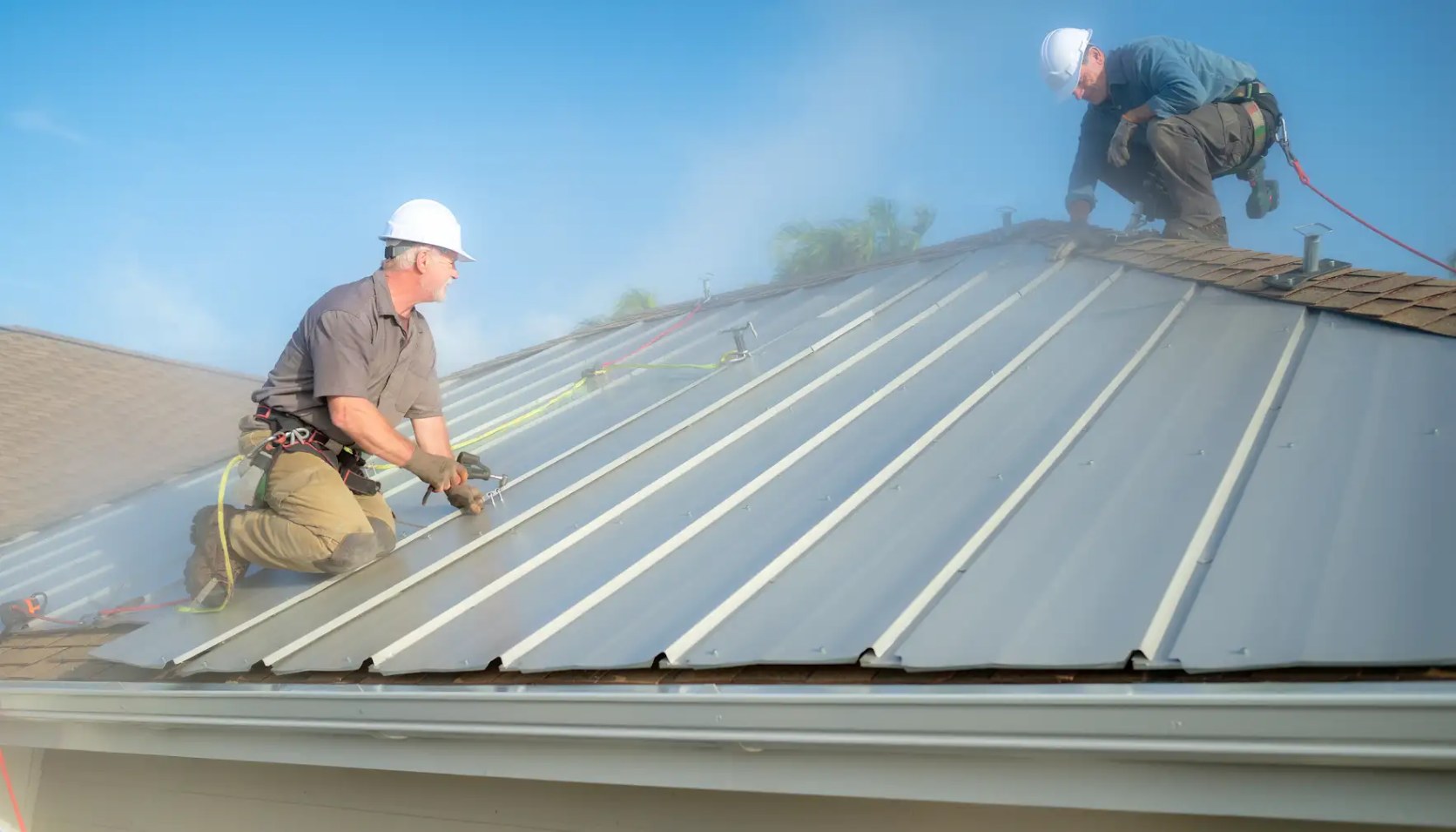
Standing seam is the premium residential choice for a reason. The panels lock together at raised vertical seams, and most of the attachment happens with concealed clips underneath the panel rather than screws driven through the face. Because the fasteners are hidden and the panel is allowed to move, a well-built standing seam roof has very few exposed penetration points to leak or back out over time. It is also less forgiving to install, since seam engagement, clip placement, and panel squareness all have to be right.
Exposed-fastener systems, sometimes called through-fastened or R-panel and 5V styles, screw directly through the metal into the structure with gasketed fasteners. They cost less and install faster, and they can serve well in the right application, but every one of those thousands of screws is a potential leak point as the neoprene washers age in the Florida sun. Fastener pattern, torque, and placement become critical. A contractor should be candid about which system fits your home, your budget, and your exposure, and should be able to show completed roofs of that exact type.
Panel Forming and Handling
How panels are formed and handled tells you a lot about a crew’s metal discipline. Long panels are surprisingly easy to damage. They can be kinked while being carried, scratched when dragged, or dented if walked on incorrectly. A specialist has a plan for staging, lifting, and setting panels so the finish reaches the roof intact, and a plan for foot traffic that protects the surface during install.
On-site roll forming is a strong signal when a job calls for it. Forming panels to the exact eave-to-ridge length on site removes end laps, which are a common weak point on long runs. A crew that owns or brings a portable roll former, and knows how to calibrate and run it, is showing a level of metal commitment that a general roofer usually does not have. Ask how panels will be produced for your roof and why.
Why Detailing and Fastening Decide a Metal Roof’s Lifespan
If there is one idea to take from this article, it is that metal roofs are made or broken at the details, not in the open field of the panel. The flat middle of a panel rarely fails. Leaks and long-term problems almost always begin at edges, penetrations, transitions, and fasteners. A specialist obsesses over these points, and you should judge a contractor by how clearly they can explain them.
How Metal Moves With Heat
Metal expands and contracts noticeably as it heats in the midday sun and cools overnight, and South Florida delivers plenty of heat year round. A long panel can grow and shrink a meaningful amount across its length every single day. If the system is not built to allow that movement, the metal fights itself. The result can be oil-canning, which is visible waviness in the panel, along with stressed seams and fasteners that slowly work loose.
This is exactly why standing seam relies on clips that let the panel float rather than pinning it rigidly, and why quality installs pay attention to fixed versus floating points. When a contractor can explain how their system accommodates thermal movement on your specific roof, you are talking to someone who understands metal. When that topic draws a blank stare, keep looking.
Flashings, Penetrations, and Fastening
Flashings tie the roof to walls, chimneys, skylights, valleys, and edges, and they are where craftsmanship shows. Good metal flashing is often custom-bent to fit the actual condition, layered so water is always directed over the top of the next piece down, and detailed to keep wind-driven rain out even when it is being pushed sideways. Penetrations such as vents and pipe boots need metal-appropriate solutions, not a generic boot slapped over a seam.
Fastening is its own discipline. The right fastener, driven to the right depth with the right torque, in the pattern the approved assembly requires, is what holds the roof down in a storm and keeps it watertight for years. Overdriven screws crush washers and invite leaks. Underdriven screws back out. Wrong fasteners can even cause galvanic corrosion where dissimilar metals meet. A specialist treats fastening as engineering, and can tell you the fastener type and pattern they will use and why.
The Layers Under the Metal
What sits beneath the panels is easy to overlook and expensive to ignore. Metal roofs get hot, so they call for a high-temperature underlayment rated to handle the heat that builds under the panels, not a standard felt that can break down early. In coastal and high-wind areas, the underlayment also serves as a critical secondary water barrier if wind-driven rain ever gets past the metal during a storm. A specialist chooses and installs this layer deliberately, and can explain what they are using and why.
The condition of the deck and the roof’s ventilation matter too. Panels want a sound, properly prepared substrate, and the assembly benefits from ventilation that lets heat and any trapped moisture escape rather than sit against the underside of the metal. When a contractor walks your project and talks about the deck, the underlayment, and airflow before they talk about panel color, you are dealing with someone who understands the whole system rather than just the surface.
What Manufacturer Certifications Mean for Metal
Manufacturer relationships matter more with metal than with almost any other roofing product, because the strongest warranties are tied to using an approved system installed by a contractor the manufacturer recognizes. A metal specialist typically works closely with specific metal manufacturers and can offer system warranties that a non-certified installer simply cannot access.
All America Construction Services holds manufacturer partnerships that include Englert and PAC-Clad, both well known in architectural and standing seam metal, alongside broader roofing credentials. Certifications like these signal that a contractor has been trained on those specific panel systems, buys genuine components, and installs to the manufacturer’s tested specifications. That is what unlocks the better warranty coverage and, just as important, means the roof is being built the way the manufacturer intended.
When you evaluate a contractor, ask which metal manufacturers they are approved with, what level of certification they hold, and what warranty that qualifies your project for. Then confirm it. A quick call to the manufacturer, or a look at the manufacturer’s find-a-contractor listing, verifies the claim. Certifications specific to metal systems carry far more weight here than a general roofing badge, because they speak directly to the product going on your home.
How Coastal Conditions Raise the Bar for Metal Work
Living near the coast changes what a metal roof has to survive, and it raises the bar for the contractor. Salt-laden air is corrosive, and it finds the weak points first. Bare cut edges, incompatible metal-to-metal contact, and low-grade fasteners all corrode faster near the water. A contractor experienced in coastal metal knows how to protect cut edges, how to avoid pairing metals that react with each other, and how to specify fasteners and clips rated for a marine environment.
Material choice is part of coastal competence. Aluminum resists salt corrosion very well and is a frequent coastal recommendation, while coated steel can perform strongly with the right metallic and paint coatings. The finish system matters too. High-performance coatings, often described by their resin technology, hold color and resist chalking and fade far better than economy finishes under relentless sun and salt. A specialist should be able to explain the trade-offs between aluminum and coated steel for your location, and match the finish to coastal exposure rather than defaulting to whatever is cheapest.
Coastal work also means taking wind seriously at every edge. Perimeter zones and corners see the highest uplift pressures in a hurricane, and metal edge metal, closures, and fastening in those zones follow specific enhanced requirements. A contractor who understands South Florida coastal metal will talk naturally about edge detailing, uplift, and corrosion protection together, because on the coast they are inseparable.
Ask a coastal candidate what long-term care their roof will need and how they support it. A well-built metal roof is low maintenance, not no maintenance, and near the water it benefits from periodic rinsing of salt buildup, a look at fasteners and sealants over time, and prompt attention to any scratch that exposes bare metal. A specialist sets honest expectations about this and can describe what a simple annual check looks like, rather than implying the roof will need nothing at all for decades.
How to Read a Metal Roofing Portfolio and Warranty
A strong portfolio is the most honest evidence you can get. Ask to see completed metal roofs, ideally the same system you want, and ideally in coastal South Florida neighborhoods similar to yours. Look closely at the parts that matter. Clean, tight seams, straight panel lines, crisp custom flashings at walls and valleys, and neat penetrations all point to a disciplined metal crew. Sloppy flashing and visible oil-canning point the other way.
References are worth the phone calls. Ask past clients whether the roof has stayed watertight through storm season, whether the crew protected the property during a fabrication-heavy install, and whether the finished roof looks as clean now as it did on day one. A metal specialist will happily connect you with owners of roofs that have already been through a few South Florida summers.
Warranties on metal come in layers, and you should understand each one before you sign. There is the manufacturer’s finish or paint warranty, which covers fade, chalk, and coating performance. There may be a manufacturer system or weathertightness warranty tied to certified installation. And there is the contractor’s own workmanship warranty on the installation itself. Read what each one covers, for how long, and what voids it. Then think through the metal-specific factors below as you compare your options.
Metal-specific factor | Why it matters in South Florida | What a qualified contractor shows |
System type experience | Standing seam and exposed-fastener installs and fail differently | Completed roofs of the exact system you want, with references |
Thermal movement detailing | Daily heat cycling stresses panels, seams, and fasteners | Clip and fastening plans that let panels move without oil-canning |
Flashing and penetration work | Edges and penetrations are where metal roofs actually leak | Custom-bent, layered flashings and metal-appropriate boots in the portfolio |
Manufacturer certification | Unlocks system warranties and correct components | Named approvals with metal makers such as Englert or PAC-Clad, verifiable |
Coastal material and finish | Salt air corrodes weak points and fades cheap coatings | Aluminum or coated-steel guidance plus high-performance finishes and marine-rated fasteners |
Use the checklist below when you interview candidates. It keeps the conversation focused on metal-specific competence rather than generic sales talk, and it quickly reveals who has done real metal work in this climate.
• Ask which metal system they install most and to see three completed examples of it nearby.
• Ask how their system handles thermal expansion and whether they use concealed clips or exposed fasteners.
• Ask how they detail flashings at walls, valleys, and penetrations, and whether they custom-bend on site.
• Ask which metal manufacturers they are certified with and what warranty that qualifies your roof for.
• Ask how they protect cut edges and finishes and which fasteners they use in a coastal setting.
• Ask to speak with two past metal clients whose roofs have already survived a storm season.
A confident metal specialist answers these without hesitation and often goes deeper than you asked. Vague or defensive answers are a signal in themselves. The right contractor treats your questions as a chance to demonstrate exactly why their crew is the one to trust with an engineered metal assembly on a South Florida home.
Metal roofing rewards patience in the hiring stage. When you can see that a contractor understands panel behavior, detailing, certifications, and coastal finishes, and you can verify it through their portfolio and references, you have found the specialist your project deserves. If you want a roof that still looks sharp and stays watertight after many South Florida summers, that groundwork is worth every minute. You can also learn more about the range of home roofing systems on the residential roofing page.
If you are planning a metal roof anywhere in Broward, Miami-Dade, or the West Palm Beach area, All America Construction Services would be glad to walk your property, talk through the right system for your exposure, and put honest options in front of you. Call us at (954) 225-6087 or email customerservice@allamericacs.com to schedule an inspection or consultation, and let our team show you the metal-specific experience behind our work before you commit to anything.
Frequently Asked Questions
Do I really need a metal specialist instead of a general roofer?
For metal, yes, it makes a real difference. Metal is an engineered assembly of panels, clips, fasteners, and flashings that must move together and shed wind-driven rain, and the failure modes differ from shingles. A contractor with genuine metal experience is far more likely to detail it correctly and deliver the long service life metal is chosen for.
Is standing seam or an exposed-fastener metal roof better for my home?
It depends on your budget, exposure, and priorities. Standing seam hides its fasteners under concealed clips and lets panels move, which usually means fewer leak points and a longer, cleaner-looking service life. Exposed-fastener systems cost less and install faster but rely on many gasketed screws that need careful placement and age over time. A good contractor will recommend the right fit and show you both.
Why does thermal movement matter so much for a metal roof in Florida?
Metal expands and contracts as it heats and cools, and South Florida delivers strong daily heat year round. If the system does not allow that movement, panels can develop visible waviness called oil-canning, and seams and fasteners can loosen over time. Proper clip and fastening design lets the metal move safely, which is why detailing matters more than the panel itself.
What manufacturer certifications should a metal roofing contractor have?
Look for approvals with established metal manufacturers, since those certifications confirm the contractor is trained on specific panel systems and can offer stronger system warranties. All America Construction Services holds partnerships that include Englert and PAC-Clad. Always verify any certification directly with the manufacturer before you sign a contract.
How does living near the coast change a metal roof installation?
Salt air is corrosive and attacks weak points such as bare cut edges, mismatched metals, and low-grade fasteners first. Coastal-experienced contractors protect cut edges, avoid pairing metals that react with each other, specify marine-rated fasteners, and often recommend aluminum or well-coated steel with high-performance finishes. These choices help the roof resist corrosion and hold its color through years of sun and salt.
What should I look for when reviewing a metal roofing portfolio?
Focus on the details that reveal craftsmanship. Tight, straight seams, crisp custom flashings at walls and valleys, neat penetrations, and panels free of oil-canning all point to a disciplined metal crew. Seeing completed roofs of the same system you want, ideally in coastal neighborhoods like yours, is the strongest evidence a contractor can offer.
What kinds of warranties come with a metal roof?
Metal roofs usually carry warranties in layers. There is a manufacturer finish warranty covering fade and coating performance, sometimes a manufacturer system or weathertightness warranty tied to certified installation, and the contractor’s own workmanship warranty on the install. Read what each covers, for how long, and what voids it, so you know exactly how your roof is protected.