

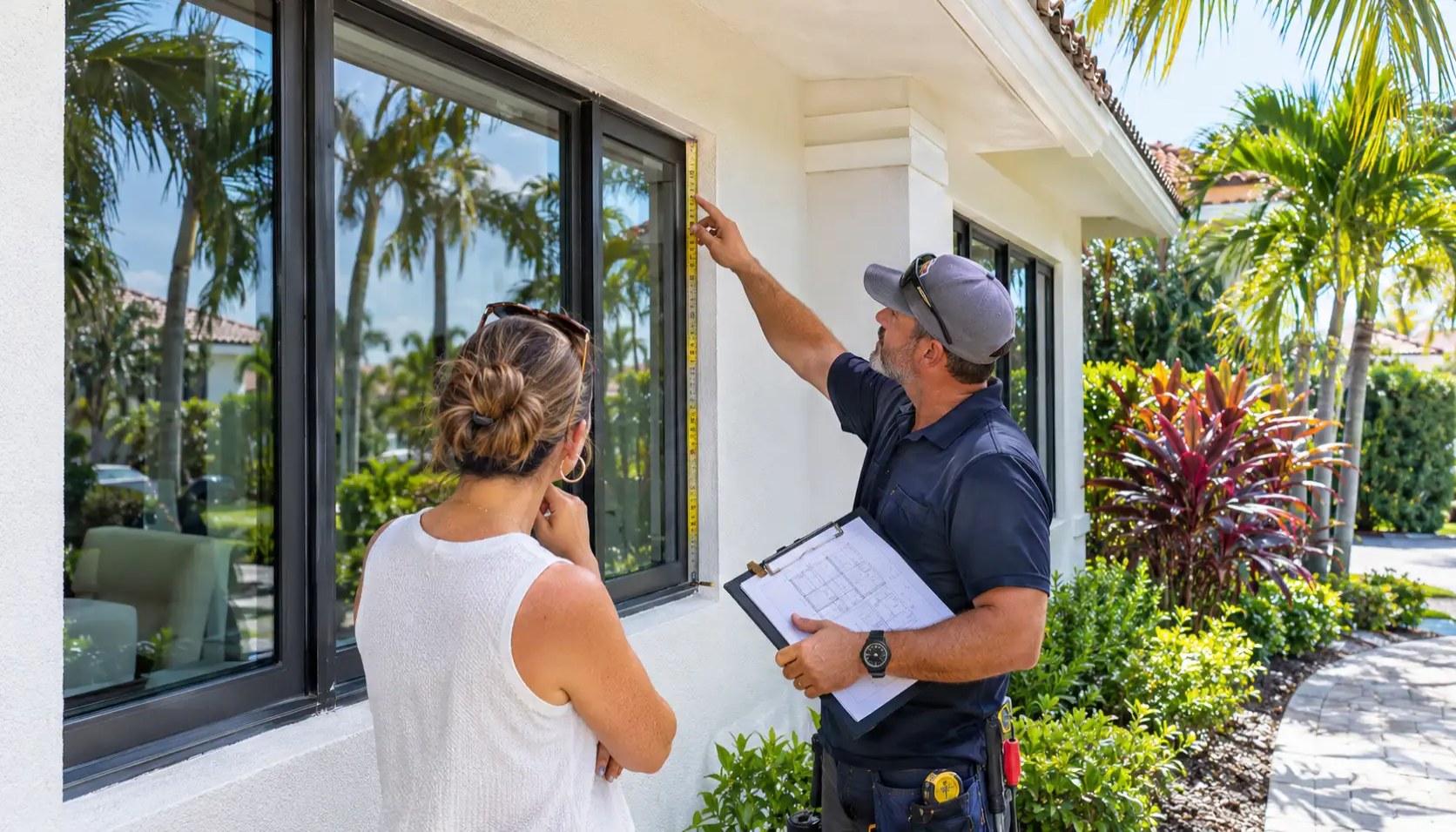
Quick answer: Before an impact window project starts, Broward homeowners should lock down three things: that every product carries a current Notice of Acceptance for the High-Velocity Hurricane Zone, which openings matter most for protection and comfort, and how the permit and inspection steps fit the schedule. Planning an impact windows installation Broward County project in this order keeps the work moving and avoids expensive changes after the crew arrives. The best projects decide the full sequence, from product approval to final inspection, before install day rather than during it.
An impact window project is one of the larger upgrades a South Florida family takes on, and the difference between a smooth job and a stressful one is almost always the planning done in the weeks before, not the labor itself. At All America Construction Services, our crews have installed hurricane-rated glass across Coral Springs, Fort Lauderdale, Pompano Beach, and inland communities like Parkland and Weston since 2018, and the projects that run cleanest share one trait. The homeowner had a plan for approvals, openings, permits, and household prep before the first measurement was taken.
This guide walks through what to plan before an impact window installation in Broward County, in the order a real project actually unfolds. It stays at the planning level on purpose, so you can make confident decisions and ask a contractor the right questions rather than trying to manage code details yourself.
Why Planning Comes Before Product Selection in Broward
Planning comes first because Broward County sits entirely inside the High-Velocity Hurricane Zone, and that single fact shapes every later decision. The High-Velocity Hurricane Zone, or HVHZ, is defined in the Florida Building Code and applies to all of Broward and Miami-Dade, which means the county enforces the most demanding wind and impact standards in the state. Products, plans, permits, and inspections all follow from that designation, so choosing a window before you understand the requirements around it usually leads to backtracking.
A well-planned project treats the window itself as the last decision, not the first. The order that works is exposure and openings, then product approvals that match that exposure, then permit and inspection path, then scheduling and household prep. Homeowners who reverse that order tend to fall in love with a specific frame color or profile, only to learn it was never tested for the HVHZ or does not meet the design pressure their home needs.
There is a practical reason to slow down at the start. Impact windows are made to order, and lead times for HVHZ-approved units run for weeks, not days. A plan built in the right sequence means the measuring, the approvals, and the permit application all happen while the glass is being manufactured, so the pieces arrive ready to install instead of waiting on paperwork. That single habit shortens the total timeline more than any rushed decision on the front end.
Take an Accurate Inventory of Every Opening First
A reliable plan starts with an accurate count of every opening you intend to protect, because that inventory drives the quote, the permit scope, and the manufacturing order. Walk the home room by room and list each window and door separately, noting its approximate size, its shape, and the floor it sits on. This simple record turns a vague request for a quote into a precise scope a contractor can price and approve without guesswork.
List doors as their own category, since entry doors, sliding glass doors, and French doors each carry different approvals and design pressures than a standard window. Sliding glass doors in particular are among the largest and highest-load openings in most Broward homes, so identifying them early helps a contractor specify the right product and flag any that need custom sizing. Garage entry doors and any door with glass panels belong on the list too, because they are part of the building envelope the code covers.
Note the openings that will need special attention, such as arched or custom-shaped windows, second-story units that require lift equipment, and any opening currently fitted with security bars or shutters that must come off first. Flagging these during planning prevents the day-of surprises that slow a crew and change a price. An impact windows installation Broward County quote built from an accurate opening inventory is far more likely to hold from proposal to final invoice than one built from a quick walkthrough.
Confirm the Product Approvals Your Broward Project Needs
The most important planning step is confirming that every window and door you consider is approved for the HVHZ, because an unapproved product cannot legally be permitted or installed in Broward. In practice this means checking for a current Notice of Acceptance and a matching design pressure rating for each opening. These two items decide whether a product is even eligible before you weigh looks, glass tint, or frame material.
What a Current Notice of Acceptance Actually Confirms
A Notice of Acceptance, commonly called an NOA, is the product approval issued through Miami-Dade County product control and honored across the Broward HVHZ. The NOA confirms that a specific window or door assembly passed the impact and pressure testing the code requires, including the Testing Application Standards known as TAS 201 for large missile impact, TAS 202 for uniform static pressure, and TAS 203 for cyclic wind loading. You can verify approvals through the Florida Building Commission product approval system and the Miami-Dade product control database, and a reputable contractor will hand you the NOA document for each product without being asked.
When you plan, ask for the NOA number for every product line you are quoted, not just a general brand name. Approvals are specific to an assembly, a size range, and a configuration, so a brand can have one product that qualifies and another that does not. Confirming this early prevents the common surprise where a quoted window turns out to be ineligible once the plans reach the building department.
How Design Pressure Ratings Shape Your Choices
Design pressure, shown as a DP rating, tells you how much wind pressure a window can handle before it fails, and the rating your home needs depends on its location, height, and exposure. A two-story home near the coast in Hollywood or Deerfield Beach faces different pressures than a single-story home inland in Coral Springs or Sunrise, and larger openings such as sliding glass doors carry higher loads than a small bathroom window. Planning around DP means matching each opening to a rating that suits its size and exposure rather than buying one specification for the whole house.
This is where an in-home consultation earns its value. A qualified estimator measures each opening, notes its exposure, and specifies a product and DP rating that fits, so the plan set that goes to the county reflects your actual home. Guessing at ratings from an online catalog is the fastest way to end up with a product that either fails review or costs more than the opening required.
Frame material is a planning decision that rides alongside approvals, not after them. Aluminum and vinyl frames each carry their own HVHZ-approved product lines, and the right choice depends on opening size, look, and exposure rather than one being universally better. Coastal homes near Fort Lauderdale and Hollywood contend with salt air that rewards corrosion-resistant hardware and finishes, while inland homes in Coral Springs and Weston have more flexibility. Decide the frame material and glass package, including any tint or laminated interlayer options, while you confirm approvals so the plan set reflects the exact products you want.
Prioritize Which Openings to Protect First
If protecting the whole house at once is not the plan, prioritize openings by exposure and risk so the first phase delivers the most protection. Not every opening carries the same weight in a storm, and a thoughtful phasing plan lets a homeowner spread a project across a budget without leaving the home vulnerable in the meantime. Every impact windows installation Broward County project benefits from this ranking, whether the goal is a full replacement or a staged approach.
The openings that usually come first are the largest areas of glass and the ones facing the predominant storm direction. In South Florida, storm winds often push from the east and southeast, so front and ocean-facing elevations and large sliding glass doors tend to be the highest priority. Bedrooms deserve early attention as well, both because families shelter there and because egress windows carry safety requirements a contractor should confirm during planning.
Deciding how many phases to plan is a personal call that balances protection against timing, not a fixed formula. Some Broward homeowners protect the entire home in one project to finish before a single hurricane season, while others complete the highest-risk elevations first and schedule the rest for the following year. Neither approach is wrong, and naming your preference early lets a contractor design a scope and permit plan that matches it rather than assuming one path.
Grouping Openings by Exposure and Use
A useful planning habit is to group openings into tiers before requesting a quote. Tier one covers large glass and storm-facing walls, tier two covers bedrooms and living spaces, and tier three covers smaller or sheltered openings like bathrooms, garages, and rear utility windows. Grouping this way gives a contractor a clear scope for each phase and makes it easy to see how much protection each dollar buys.
Phasing has a code consequence worth planning for too. Partial projects still require a permit, and mixing impact and non-impact openings on the same elevation can affect how the home performs in a wind mitigation review. Ask your contractor how a phased plan interacts with a wind mitigation inspection so the sequencing supports, rather than complicates, any future assessment your insurer may request.
Understand the Permit and Inspection Path Early
Plan for permits and inspections from the start, because in Broward County every impact window replacement that alters the building envelope requires a permit before work begins. Under the Florida Building Code permitting rules, replacing windows is not a like-for-like swap you can do quietly, and skipping the permit can create problems at resale, during an insurance claim, or at a future inspection. Knowing the path in advance keeps the schedule realistic.
The permit package for an HVHZ project typically includes signed and sealed plans, the NOA documentation for each product, and, for projects above a set value, a Notice of Commencement. Under Florida’s construction lien law in Chapter 713, a Notice of Commencement is required for improvements over 2,500 dollars, and it is recorded before work starts. A licensed contractor normally prepares and pulls the permit as part of the project, and you should confirm that they do rather than assuming the responsibility falls to you.
Inspections close out the project, and planning around them prevents a common mistake. The building department inspects the installation, so you should not cover openings, reinstall interior trim, or hang treatments until the work has passed. Many Broward homeowners also live in an HOA community, and communities in Coral Springs, Parkland, and Weston frequently require architectural approval before exterior changes. Submitting for HOA approval early, sometimes weeks ahead, keeps that step from becoming the item that delays everything else.
Sequence the Work Around Your Home and Household
Sequencing is where a plan turns into a calendar, and the order of steps matters as much as the steps themselves. A realistic sequence runs from HOA approval, to product selection and NOA confirmation, to measuring, to the permit application, to the manufacturing lead time, to installation, and finally to inspection and putting rooms back together. Laying this out on a timeline shows where the waiting happens and lets a household plan around it.
The manufacturing window is the longest stretch, and it is the part homeowners most often forget to plan for. Because HVHZ-approved products are built to your exact measurements, the glass is not sitting on a shelf. Using that lead time to finish HOA approval and permitting means the crew can install as soon as the units arrive, rather than the units arriving and then waiting on a permit.
Good sequencing also sets communication expectations. Agree with your contractor on how you will be updated at each milestone, from approval to order confirmation to a firm install date, so the quiet weeks during manufacturing do not feel like a stall. Confirm who your point of contact is and how changes are handled if an opening needs a different product once it is measured. A short standing check-in during the wait keeps a multi-week project feeling managed rather than uncertain.
Preparing Each Room Before the Crew Arrives
Room prep is simple, but planning it saves the crew time and protects your belongings. Before install day, remove blinds, curtains, and rods from every opening in scope, and label them so they return to the right room afterward. Clear furniture, wall art, and fragile items several feet back from each window, since installation involves removing the old frame and working the surrounding wall.
• Take down and label all window treatments, including blinds, shades, curtains, and hardware, so nothing is damaged and everything returns to the correct opening.
• Move furniture and floor items at least a few feet from each window to give the crew a clear working zone and protect your belongings from dust.
• Secure pets in a separate room, since doors and windows will be open during the work and crews move in and out frequently.
• Confirm access to every opening, including any blocked by shelving, security bars, or exterior landscaping that needs trimming back beforehand.
• Ask whether stucco patching and interior drywall or trim repair are included, so you know the condition each opening will be left in.
One practitioner note from years of Broward installs. Older homes often reveal surprises once the original frame comes out, such as prior water intrusion, cracked stucco, or an opening that was never flashed correctly. A good plan leaves a little room in the schedule and budget for these findings rather than assuming every opening is textbook, because coastal homes near Fort Lauderdale and Pompano Beach in particular tend to show wear from salt air around the frames.
Questions to Confirm With Your Contractor Before Signing
Before signing anything, confirm a short list of items that separate a qualified installer from a risky one. Impact windows are only as strong as the installation, so the contractor you choose matters as much as the product. These questions keep the conversation focused on what actually protects your home.
• Are you licensed in Florida, and can I verify your license through the state Department of Business and Professional Regulation.
• Will you provide the Notice of Acceptance for each product, and does each one match the design pressure my openings need.
• Who pulls the permit and schedules the county inspection, and is that included in the price.
• What does the warranty cover, and how is the product warranty different from the labor warranty on the installation.
• Is stucco, drywall, and trim repair around each opening part of the scope, or a separate cost.
• How do you handle openings that reveal water damage or framing problems once the old window is removed.
Ask for these answers in writing on the proposal, not just verbally. A written scope that names the products, the NOA numbers, the permit responsibility, and the repair work removes almost every dispute that comes up mid-project. If a contractor hesitates to put the NOA documentation or permit responsibility in writing, treat that as a planning red flag worth acting on before you commit.
Plan Around Broward’s Hurricane Season and Weather Window
Timing the project around Broward’s climate is the final planning layer, and it rewards homeowners who start early. Atlantic hurricane season runs from June 1 through November 30, with peak activity generally from August into October, so a full-house replacement that begins in the heart of the season risks a storm interrupting the work while openings are exposed. Planning the manufacturing and install to land before peak season removes that risk.
Starting early also eases the scheduling crunch. Demand for impact window work climbs across South Florida every spring as families prepare for the season, and the contractors and manufacturers with the strongest HVHZ track records book out first. A homeowner who begins planning in winter or early spring has the widest choice of products and install dates, while one who waits until a storm is named is competing for the last slots of the year.
For a staged project, the weather window can guide which phase goes first. Completing the storm-facing and largest openings ahead of peak season delivers the most protection for the highest-risk months, then the remaining tiers can follow in the quieter part of the year. This keeps the home meaningfully protected at every step rather than fully exposed until the last phase is done.
Product availability can also shift between seasons, so a plan made early avoids last-minute compromises. Manufacturers occasionally update or retire product lines, and an approval that was current when you first shopped should be reconfirmed before the order is placed. A contractor who stays close to the Florida Building Commission approvals and orders promptly protects you from committing to a product whose paperwork lapses mid-project. Planning ahead simply gives everyone more room to get these details right.
A Simple Planning Checklist for Your Broward Project
The table below summarizes the planning phases in the order they should happen, so you can track a project from first decision to final inspection. Use it as a working checklist and confirm each phase with your contractor before moving to the next.
Planning phase | What to confirm | Why it matters |
Exposure and openings | Which openings face the highest storm risk and which to protect first | Directs budget to the most vulnerable glass before install begins |
Product approvals | Current NOA and matching DP rating for every product | An unapproved product cannot be permitted or installed in the HVHZ |
Permit and HOA | Contractor pulls the permit, HOA architectural approval submitted early | Missing approvals stall the schedule and can affect resale and claims |
Manufacturing lead time | Order placed early so units are built during approvals | Overlapping the wait with paperwork shortens the total timeline |
Household prep | Treatments removed and labeled, furniture cleared, access confirmed | A ready home lets the crew work faster and protects belongings |
Installation and inspection | Work passes county inspection before covering openings | Closes the permit legally and confirms the install meets code |
A homeowner who plans an impact windows installation Broward County project through these phases in order rarely faces the mid-project surprises that derail rushed jobs. The planning does not need to be complicated, it only needs to happen before the work starts rather than during it. That is the single habit that turns a stressful upgrade into a predictable one.
Keep every document the project generates, including the signed proposal, the NOA sheets for each product, the permit, and the final inspection approval. These records matter later, when you sell the home, file an insurance claim, or request a wind mitigation inspection that could affect your premium. A well-documented project is easier to prove and easier to trust, and assembling that file is the natural last step of a plan that started before the first window was measured.
Start your project the right way with a Broward County team that plans approvals, openings, and permits before install day. Call All America Construction Services at (954) 225-6087 or request an in-home assessment to map your impact window plan.
For a closer look at scope, products, and the local process, see our impact window installation service for Broward County homes and bring your list of openings to the conversation. A clear plan on your side makes for a faster, more accurate quote on ours.
Frequently Asked Questions
Do I need a permit to replace windows with impact windows in Broward County?
Yes, Broward County requires a permit for any window replacement that alters the building envelope, which includes all impact-resistant glass. Under the Florida Building Code, this work is not a like-for-like swap, and a licensed contractor normally pulls the permit and schedules the county inspection as part of the project. Skipping the permit can cause problems at resale, during an insurance claim, or at a future inspection.
What is a Notice of Acceptance and why does it matter for my project?
A Notice of Acceptance, or NOA, is the product approval issued through Miami-Dade product control and honored across the Broward High-Velocity Hurricane Zone. It confirms that a specific window or door assembly passed the impact and pressure testing the code requires. Ask your contractor for the NOA number on every product you are quoted, because approvals are specific to each assembly and a brand can have both qualifying and non-qualifying products.
Which windows should I replace first if I cannot do the whole house at once?
Prioritize the largest areas of glass and the openings facing the predominant storm direction, which in South Florida is usually the east and southeast elevations. Sliding glass doors and bedroom windows also deserve early attention, the first for their size and the second for shelter and egress safety. Grouping openings into tiers by exposure lets you phase the project across a budget while still protecting the most vulnerable glass first.
How far ahead should I start planning an impact window project in Broward?
Start planning several weeks to a few months ahead, because HVHZ-approved windows are made to order and the manufacturing lead time is the longest part of the process. Beginning in winter or early spring, before Atlantic hurricane season runs from June through November, gives you the widest choice of products and install dates. Early planning lets HOA approval and permitting happen while the glass is being built, which shortens the overall timeline.
What should I do to prepare my home before installation day?
Remove and label all window treatments, then move furniture and fragile items a few feet back from each opening to give the crew a clear working zone. Secure pets in a separate room since doors and windows will be open during the work, and confirm every opening is accessible, including any blocked by shelving or landscaping. Also confirm in advance whether stucco and interior trim repair are included in your scope.
Do I need HOA approval for impact windows in Coral Springs and other Broward communities?
Many Broward communities do require architectural approval before exterior changes, and neighborhoods in Coral Springs, Parkland, and Weston frequently ask for it. Submit for HOA approval early, sometimes weeks ahead, so it does not become the step that delays your permit and install. Check your community’s rules at the start of planning rather than after you have chosen products.
How do I verify that a contractor is qualified to install impact windows in Broward?
Confirm the contractor is licensed in Florida through the state Department of Business and Professional Regulation, and ask for the Notice of Acceptance for each product they quote. Request that the permit responsibility, the product approvals, and any stucco or trim repair be written into the proposal rather than promised verbally. A qualified installer will provide this documentation without hesitation, since the strength of impact windows depends heavily on a correct installation.