Metal roofing has shifted in the last decade from a category most homeowners thought of as “industrial” to a mainstream residential option, and Florida is one of the regions where that shift has been most pronounced. The combination of intense sun, humidity, and hurricane season puts a premium on roofing systems that can take a beating without quietly aging out, and metal delivers on that front in a way few other systems match. But “metal roofing” is not a single product. It is a family of systems that look different, perform differently, and cost differently, and a homeowner researching the category quickly discovers that the choice between types matters as much as the choice to go metal in the first place.
This article walks through the popular types of metal roofing used in residential installations in South Florida, what each one looks like, where it performs best, and what to weigh when deciding. It also covers the underlying material choices, which are a separate decision layered on top of the system choice, and the practical considerations specific to Florida that should shape any metal roof project. The goal is not to make the decision for you, but to give you the structure to make it well after a property-specific consultation with experienced roofing companies in Broward County.
Why Metal Roofing Earns Its Place on Florida Homes
Before the types, a brief word on why metal is worth a serious look in the first place. The reasons are pragmatic, not aesthetic, even though aesthetics often clinch the decision in the end.
Durability That Suits the Climate
Metal roofs in South Florida regularly reach service lives of forty to seventy years or more depending on the material, considerably longer than most shingle installations. They resist the wind, impact, and moisture extremes the climate dishes out, with the right product properly installed often surviving major hurricanes with limited or no damage. For homeowners who plan to stay in a home long-term, or for owners who simply do not want to replace a roof again in twenty years, metal addresses a real planning concern.
Energy Performance Through Reflectance
Many metal roofing systems include reflective surface treatments that bounce back significant portions of the sun’s heat instead of absorbing it. In Florida, where cooling load dominates a year-round energy bill, that reflectance can reduce attic temperatures meaningfully and ease air-conditioning demand. The benefit varies by home and should not be quoted as a fixed figure, but as a planning factor it shifts the comparison in metal’s favour, especially for homes with significant sun exposure or limited shade.
Recyclability and Sustainability
Most metal roofing is made from substantial recycled content and is itself fully recyclable at the end of its life. For homeowners who care about the environmental footprint of construction decisions, this is a meaningful factor, particularly when paired with the long service life. The roof installed today is less likely to end up in a landfill than the asphalt shingle alternative, and the materials used were less likely to require fresh extraction.
Type 1: Standing Seam Metal Roofs
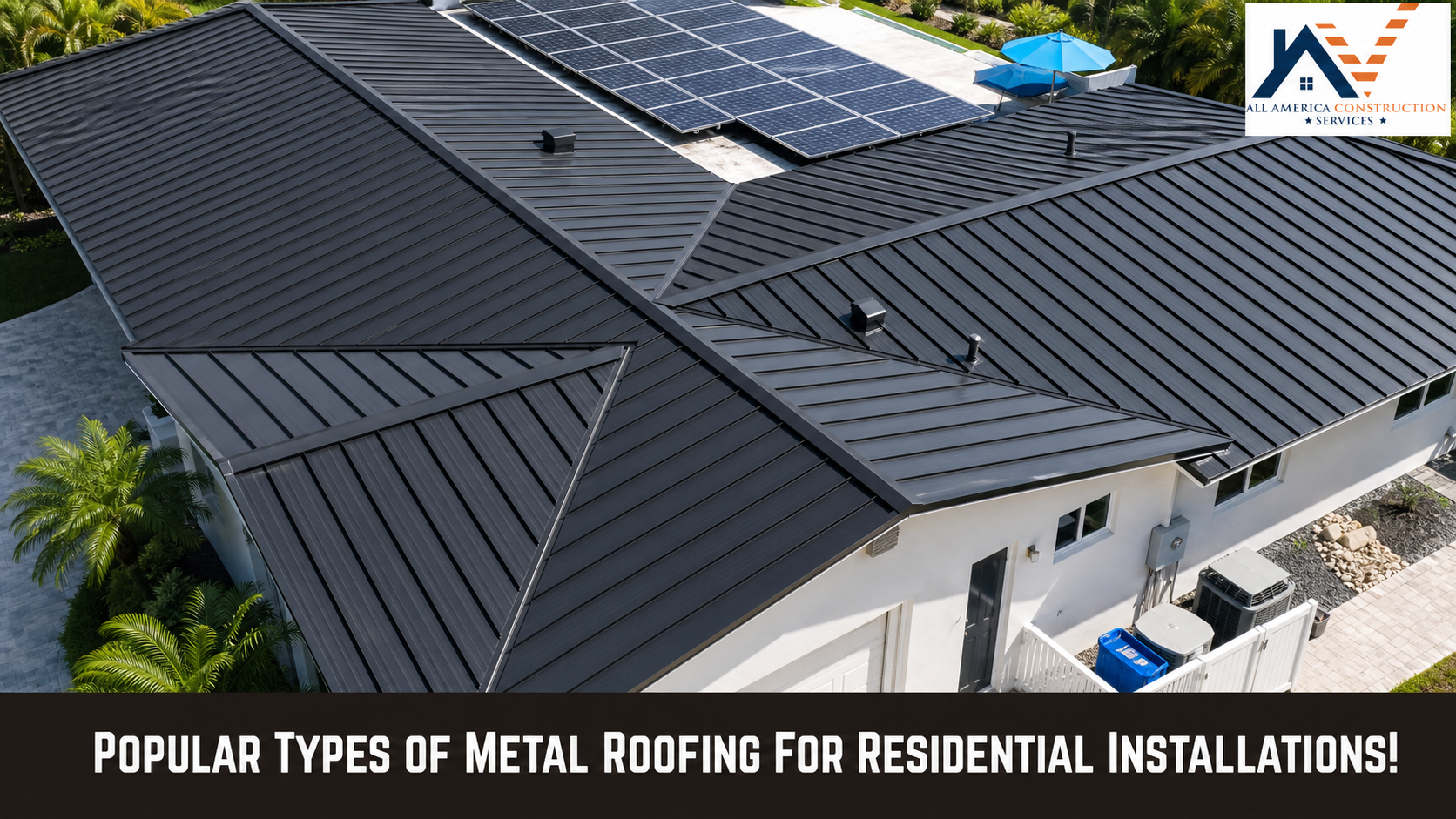
Standing seam is the metal roofing system most often associated with modern residential design, and it has become increasingly visible on Florida homes as homeowners value its combination of performance and clean aesthetic.
How Standing Seam Works
Standing seam roofs consist of long vertical panels joined by raised seams that interlock or are mechanically crimped together to create a watertight connection. The fasteners are concealed beneath the seams rather than driven through the surface, which eliminates one of the most common failure paths in older metal systems. Panels run from ridge to eave in single lengths where possible, reducing the number of joints across the roof and improving water-shedding performance during the heaviest rains Florida produces.
Where Standing Seam Performs Best
Standing seam excels on homes with simple roof geometries where long panel runs are practical, on properties with significant wind exposure where its continuous fastening pattern shines, and on homes where the contemporary visual style fits the architecture. Its clean lines complement modern, minimalist, and even traditional homes depending on colour and finish. For storm performance, standing seam is among the strongest residential roofing options available, which is why it appears so often on coastal and high-exposure Florida properties.
Type 2: Metal Shingles and Tiles
For homeowners drawn to the durability of metal but uncertain about the modern aesthetic of standing seam, metal shingles and tiles offer a different visual story while keeping the underlying performance.
The Visual Range
Metal shingles are formed and finished to resemble traditional roofing materials. Some emulate the look of architectural asphalt shingles. Others mimic wood shake. Still others are shaped and coloured to resemble clay or slate tile. From the street, a well-installed metal shingle roof can be indistinguishable from the material it imitates, with the structural and storm performance benefits of metal underneath. For homeowners who want a traditional appearance but a long-lasting product, this category offers a compelling combination.
Performance and Installation Considerations
Metal shingles install in overlapping courses similar to the materials they emulate, with interlocking edges that resist wind uplift. Their fastening is typically concealed beneath the next course of shingles, similar to standing seam’s hidden fastener approach. Performance against wind, impact, and weather is generally comparable to other metal systems, though specific wind ratings vary by manufacturer and product line. Cost typically sits between standing seam and stone-coated metal, depending on finish and complexity.
Type 3: Stone-Coated Metal Roofing
Stone-coated metal combines the structural strength of metal with the visual appeal of a stone-textured surface. The result is a product that looks closer to traditional tile or shingle than other metal options while still delivering metal’s durability.
What the Stone Coating Adds
The metal substrate provides the load-bearing strength, the impact resistance, and the long service life. The stone granule coating provides the surface finish, the colour stability, and a texture that softens the visual impression considerably compared with bare metal. The combination resists ultraviolet exposure well, handles impact from hail or debris better than some uncoated options, and offers a finish that does not fade or chalk the way painted metal sometimes does over decades. For Florida specifically, the surface stability under harsh sun is a meaningful advantage.
Where Stone-Coated Fits Best
Stone-coated metal often appeals to homeowners who want the appearance of clay tile without the weight or the cost, or who want a traditional look on a home where standing seam would feel too modern. It also fits well on homes with complex roof geometries where standing seam’s long-panel approach becomes impractical. The visual presence works particularly well on Mediterranean or Spanish-influenced South Florida architecture, where the textured surface complements the design language already in place.
Type 4: Corrugated Metal Panels
Corrugated metal is the most economical of the metal roofing categories and the one most often associated with utilitarian buildings, but it has a residential place in specific design contexts.
The Distinctive Profile
Corrugated panels carry a repetitive wave-like or trapezoidal profile that gives the surface both visual interest and structural rigidity. The profile is the source of the system’s strength; the corrugation allows thinner metal to handle loads that flat sheet could not, which is why corrugated installations use less material per square foot than other systems while still performing well. Installation is straightforward, often faster than other metal types, and the material cost is the lowest in the category.
The Residential Use Case
For residential use, corrugated panels show up on homes with rustic, industrial, or modern-farmhouse aesthetics where the visible profile complements the architecture. They also appear on accessory structures such as detached garages, workshops, and pool houses where the visual style and cost combine well. Performance against wind and weather is solid when properly installed, though exposed fasteners through the panel itself are more common with corrugated than with standing seam, which is something to consider for long-term maintenance and leak risk.
Material Choices Beneath the Style
Layered on top of the system choice is the material choice. The same standing seam system can be installed in aluminum, steel, copper, or zinc, with different cost, performance, and longevity profiles for each.
Aluminum: Lightweight, Corrosion-Resistant, Coast-Friendly
Aluminum is a popular choice for South Florida homes because it does not corrode under salt-air exposure the way some steel products can. Its lightweight nature reduces the load on the structure compared with heavier materials. Reflectance options work well with aluminum, supporting energy performance. The trade-off is a slightly higher upfront cost than basic galvanized steel, but the corrosion resistance often makes aluminum the better long-term value, particularly for coastal-influenced properties.
Steel: Strength, Affordability, and Coatings
Steel is the workhorse of metal roofing and the most common material in many residential metal installations. Galvanized steel carries a zinc coating that prevents rust, while galvalume adds aluminum to the zinc coating for enhanced corrosion resistance. Steel offers excellent strength, withstands high winds well, and remains the most cost-effective metal option for many homeowners. For inland Florida homes without direct coastal exposure, a quality coated steel system delivers strong performance at a reasonable cost.
Copper: Aesthetic Statement, Long Lifespan
Copper occupies the premium end of the metal roofing market. It is significantly more expensive than aluminum or steel, but its lifespan and visual presence justify the cost for homeowners who specifically want what copper offers. Over time, copper develops a natural patina, transitioning from its initial bright finish to deeper bronze and eventually green tones. Properly installed copper can last well over a hundred years, which often means a copper roof is a one-time investment for a home. It is rare in Florida residential installations but appears on architectural projects where appearance and longevity are both priorities.
Zinc: Self-Healing, Eco-Friendly, Long-Lasting
Zinc is another premium option, less common than copper but valued for specific properties. Minor scratches and surface imperfections in zinc can heal over time as the metal patinates, giving the roof a self-maintaining quality unique among metals. It is fully recyclable, has a low environmental footprint, and offers long service life. Like copper, zinc is uncommon in standard Florida residential projects but worth knowing about for owners researching premium metal options.
System Type | Visual Style | Best Fit |
Standing seam | Modern, clean vertical lines | Simple geometries, high wind exposure |
Metal shingles or tiles | Traditional, resembling shake or tile | Homes wanting classic look with metal performance |
Stone-coated metal | Stone-textured, tile-like | Mediterranean style, complex roof geometry |
Corrugated panels | Distinctive wave profile | Rustic, industrial, modern-farmhouse aesthetics |
How South Florida Conditions Shape the Decision
The same metal roof can perform very differently in different settings. South Florida’s specific conditions push the decision in particular directions.
Coastal Versus Inland Exposure
For homes within a few miles of the coast, salt-air exposure favours aluminum or properly coated steel over standard galvanized products. For inland homes where salt is less of a factor, galvanized or galvalume steel is often the best value. The specifics depend on the property, the prevailing wind direction, and the surrounding shelter, which is why a property-specific consultation matters more than a default recommendation.
Storm Performance and Code Considerations
Florida building codes set baseline wind and impact requirements, and metal systems can meet or exceed those requirements when properly specified and installed. Standing seam in particular tends to handle high-wind exposure exceptionally well. For homes in High-Velocity Hurricane Zones, products approved for HVHZ use carry the testing documentation needed to confirm compliance. Confirming the specific product approvals before installation is part of any quality metal roofing project, similar to the documentation that matters for impact windows or for premium tile roof installation Broward County homeowners choose for traditional-look projects.
Maintenance and Long-Term Care
Metal roofs are not maintenance-free, even though they require considerably less than many alternatives. The maintenance they do need is mostly inspection and small attention, not major work.
What Maintenance Actually Involves
Annual inspection by a qualified roofer covers the seams, fasteners (where exposed), flashings, sealants, and any penetrations. Clearing debris from valleys and gutters prevents the moisture-and-debris combination that wears any roof. Small touch-ups to coatings or sealants can extend service life and prevent the small issues from growing into bigger ones. Done routinely, this maintenance keeps a metal roof in excellent condition for its full design life.
When Professional Repair Is Needed
Even metal roofs eventually see damage. Severe storms, falling branches, or accumulated wear over decades can produce dents, fastener issues, or sealant failures that benefit from professional repair. Working with a roofing partner who knows metal systems specifically matters, since metal repairs use techniques and materials different from shingle or tile repairs. Catching damage early, addressing it correctly, and documenting the work is how metal roofs deliver the long service lives they are capable of.
How the Choice Plays Out Over the Years That Follow
The differences between these system and material choices feel abstract during the decision and become very concrete over the years that follow. A standing seam aluminum roof installed at thirty years old often looks substantively the same at fifty, having needed only routine inspection and minor attention along the way. A stone-coated metal roof maintains its textured finish across the same span, with the stone granules continuing to do their work against ultraviolet exposure long after a shingle alternative would have faded and aged. A copper roof installed today will outlive the next several owners of the home, slowly transitioning through its patina stages while still doing exactly what it was installed to do.
This is the unspoken benefit of metal that most cost comparisons miss. The cost of a roof is not just the cost on the day it goes up. It is the cost across the life of the house, including the replacements that would have happened on a shorter-lived system and the maintenance demands that some materials carry that others do not. A metal roof tends to look better on that longer math than its upfront cost suggests, particularly for homeowners planning to stay in the home for many years. The decision is rarely just about this season; it is about which version of the next several decades you want to live with above your head.
How All America Construction Services Helps Florida Homeowners Choose Metal
All America Construction Services handles metal roofing across the popular system types and material choices, with the local experience to match the system to the property. The conversation starts with the home itself, not with a default recommendation.
On-Site Assessment and System Matching
The team walks the property, considers the architecture, exposure, structural capacity, and the homeowner’s priorities, and recommends the system and material combination that fits best. Sometimes that is standing seam in aluminum for a coastal modern home. Sometimes it is stone-coated metal for a Mediterranean property with complex geometry. Sometimes the conversation ends with a recommendation that something other than metal is actually the better fit, depending on the home. The recommendation reflects the property rather than a sales push.
Schedule a Metal Roofing Consultation
If you are considering metal roofing for your home and want to know which type and material would fit best, the next step is a property-specific consultation. Request a free on-site assessment and start with the home itself. From the conversation comes a recommendation built on what your home actually needs and what you specifically want from the roof, rather than a generic pitch built around what is easiest to sell.
Frequently Asked Questions
What are the most popular types of metal roofing for residential homes?
Standing seam metal, metal shingles and tiles, stone-coated metal, and corrugated panels cover the main categories used on residential projects. Each has a distinct visual style and performance profile, and the right choice depends on the home’s architecture, exposure, and the homeowner’s priorities. A property-specific consultation is the best way to match the system to the home.
How long does a metal roof last in Florida?
Most quality metal roofing systems last forty to seventy years or more in Florida, depending on the material and how well the roof is maintained. Copper and zinc roofs can last considerably longer. Even the shortest realistic estimate for a properly installed metal roof considerably exceeds the typical lifespan of asphalt shingle alternatives, which is part of why metal appeals to long-term-thinking homeowners.
Are metal roofs energy-efficient?
Many metal roofing systems include reflective treatments that reduce solar heat absorption, easing cooling load in a climate like Florida’s. The benefit varies by home, exposure, and the specific product, so it should not be quoted as a fixed figure, but as a planning factor it favours metal for homes with significant sun exposure. Reflectance is one of several reasons metal appeals to Florida homeowners.
How do metal roofs handle hurricanes?
Quality metal systems installed to current Florida code generally handle hurricanes well, with standing seam in particular performing strongly under high-wind conditions. No roofing system can be promised to come through every storm untouched, but the track record of properly installed metal in hurricane-prone areas is meaningful. Specifying products with the right wind and impact ratings, and ensuring quality installation, is what delivers the performance.
What is the best metal for a coastal Florida home?
Aluminum is often the best choice for homes near the coast because it does not corrode under salt-air exposure the way some steel products can. Properly coated steel can also work in coastal settings if the coating is matched to the conditions. For inland homes, galvanized or galvalume steel is typically the best value. A consultation with a roofer who knows the specific property is the right way to choose.
Are metal roofs noisy during Florida rain?
Properly installed metal roofs with appropriate underlayment and insulation are generally no louder than other roofing systems during rain. The image of metal as a noisy material comes from older installations on uninsulated barns and similar buildings, not from modern residential installations. A quality install in a residential home rarely produces noise that homeowners describe as a problem.
Does All America Construction Services install metal roofing in Florida?
Yes. The team installs standing seam, metal shingles, stone-coated metal, and corrugated systems across South Florida, in the material that matches the property and exposure. The conversation starts with on-site assessment and ends with a recommendation built on the home itself. Contact the team to schedule a consultation.