

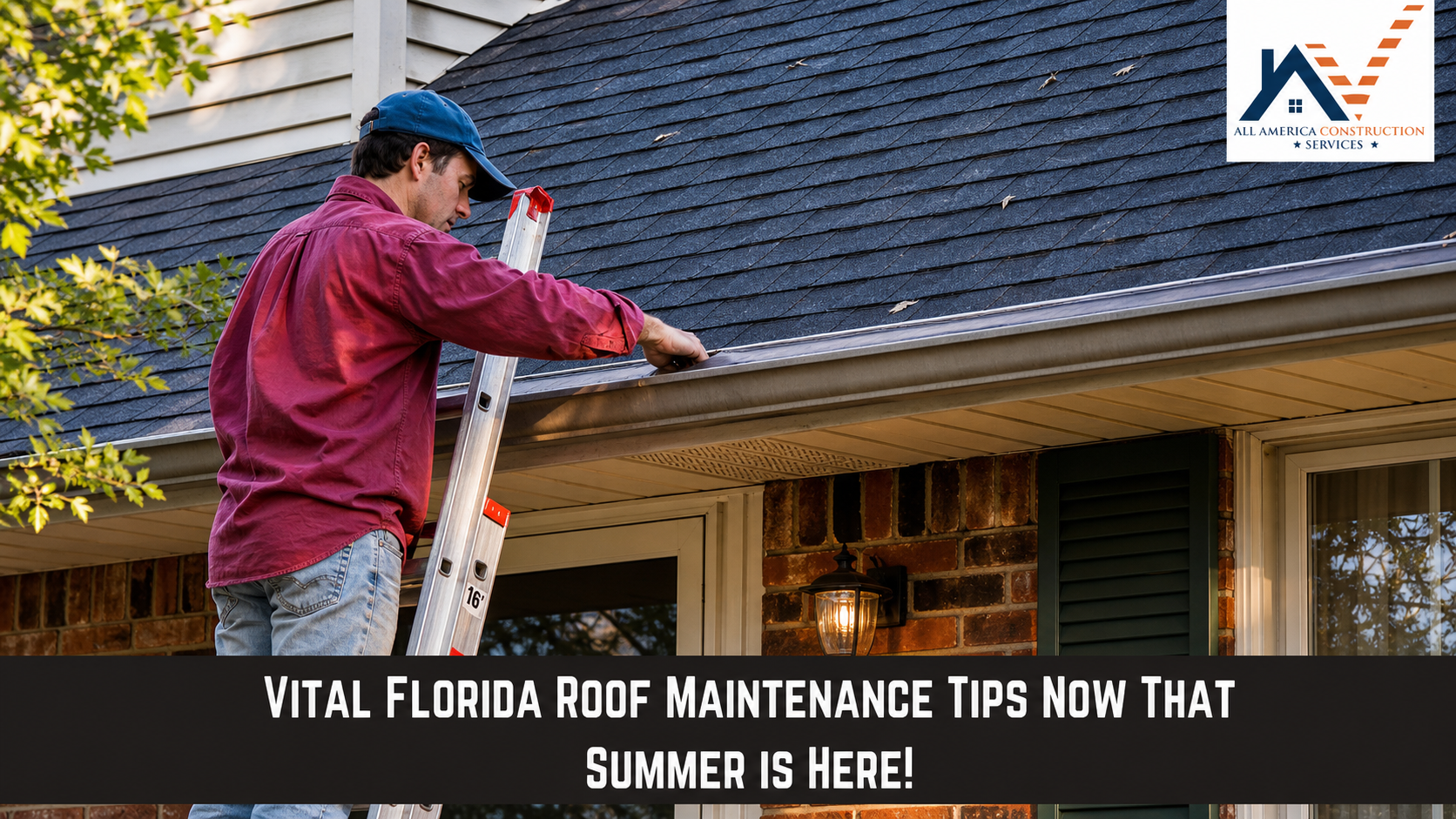
For most of the country, summer is the season roofs get a break. The weather settles, the storms tail off, and homeowners can ignore the roof for a few months without consequence. Florida is the opposite. Summer is the season that puts a Florida roof under the most stress all year, by a meaningful margin. Heat that drives surface temperatures past one hundred and forty degrees. Humidity that never lets the roof fully dry. Ultraviolet exposure that breaks down materials measurably faster than in milder climates. Afternoon thunderstorms that test sealants and drainage almost every day. And a six-month hurricane season that builds toward its peak in late summer. None of that is theoretical. It is the daily reality your roof faces from June through September, and the homeowners who plan summer maintenance with this in mind are the ones whose roofs come through it without surprises.
This article is the focused, season-specific version of roof care. Not the year-round generic checklist, but the things that genuinely matter through a Florida summer and the order to do them in. Some of these tasks have natural deadlines tied to hurricane season. Others are about catching damage before the heat peaks. Together they make up a practical summer rhythm that turns the hardest months of the year into a managed routine rather than a season of suspense.
If your roof has not had professional attention recently, summer is exactly the right moment to get an experienced team of roofing companies in Broward County on the property. A pre-season assessment costs little, takes a couple of hours, and pays back through a season that is otherwise full of opportunities for things to go wrong.
Why Summer Is the Hardest Season for a Florida Roof
Understanding what summer actually does to a roof clarifies why each of the maintenance tasks below matters. The stress factors stack on top of each other rather than alternating.
Heat, UV, and Humidity Compound Daily
Florida summer days deliver hours of direct sun at extreme intensity, surface temperatures that bake roofing materials, and humidity that prevents the roof from drying between rains. Each of these alone would shorten the life of any roofing system; together they compress the wear timeline considerably. The asphalt binder in shingles loses flexibility faster. Sealants dry and crack sooner. Underlayments age more rapidly. Even tile and metal systems experience accelerated deterioration of fasteners, gaskets, and flashings under these conditions. None of this means the roof is failing; it means the wear that would happen over a decade in a mild climate happens in considerably less time here, which is why proactive maintenance matters more.
Storm Season Tests Everything That Heat Already Weakened
Then comes the storm side. Hurricane season runs from June through November, with peak activity in late summer through early autumn. Even before a named storm, daily thunderstorms test drainage and sealing. When a real hurricane arrives, the roof is tested in conditions it has already been weakened by. The combination is what makes summer the make-or-break season. A roof that arrives in June with its sealing, flashing, and drainage in good order has a much better chance of arriving in October unscathed than one that started the season with neglected weak points.
Tip 1: Schedule Your Pre-Hurricane Inspection Early in the Season
The single most important summer maintenance task is the professional inspection that happens before hurricane season ramps up. Done in late May or early June, it gives the homeowner enough time to schedule any needed repairs while contractors still have calm-weather capacity.
What the Inspection Should Cover
A real pre-hurricane inspection walks the entire roof surface and looks specifically at the elements that storms attack first. Edges and corners, where wind pressure peaks. Flashings at chimneys, walls, skylights, and valleys. Penetrations including vent boots and pipe collars. Drains, scuppers, and gutters. The condition of the underlayment where visible, and the attic conditions where access allows. The inspector should produce a written report with photographs, a prioritised list of any concerns, and a clear recommendation on what should be addressed before storm season peaks.
The Cost of Doing It Late
Inspections scheduled in August or September run into a roofing market that is already busy with active storms and damaged properties. Repair availability shrinks, scheduling stretches, and any issue identified late in the season may not be addressable in time. A May or early June inspection avoids that congestion and gives every finding a comfortable window for repair. This is one of those cases where the calendar makes a meaningful difference in cost and outcome, and the difference between a smoothly managed season and a stressful one often comes down to whether the inspection happened in May or in August. Most homeowners who shift to early-season inspections describe it later as one of the better small changes they made to how they care for the home, and few of them ever go back to the older habit of waiting for problems to find them.
Tip 2: Check Attic Ventilation and Cooling Performance
Attic ventilation is one of the less visible but more consequential parts of a Florida roof’s summer health. An attic that traps heat and moisture is one whose roof and home both pay a price.
What Adequate Ventilation Looks Like
A properly ventilated attic moves air through it, with intake at the eaves and exhaust at or near the ridge. That airflow carries hot, humid air out of the attic and replaces it with cooler ambient air. When it works, the underside of the roof deck stays meaningfully cooler than it would otherwise, the roofing materials above last longer, and the cooling load on the home is reduced. An inspection should confirm that intake vents are not blocked, that exhaust paths are clear, and that the system overall is moving air as designed.
Signs Ventilation Is Not Working
An attic that feels dramatically hotter than the outdoor air, or that holds noticeable humidity, is sending a clear signal. So are rooms in the home directly beneath the roof that run hotter than the rest. Visible signs in the attic include moisture on the underside of the deck, mildew growth, or insulation that looks damp or compressed. These are not crises in any single visit, but over a season they accelerate roof aging and drive cooling costs. Addressing ventilation early in summer protects both the roof and the home’s comfort through the months that follow.
Tip 3: Inspect and Refresh Sealants Before the Heat Peaks
Roof sealants do not last forever, and Florida heat shortens their useful life. Summer is the season when neglected sealant failures most often become leaks.
Where Sealants Wear Out First
The places sealants are most needed are also where they age fastest. Around penetrations such as plumbing vents and exhaust fans. Along flashing edges where they bridge metal to roof surface. At the intersections between roof planes and walls. Inspect these locations for sealant that is cracked, missing, lifting, or has lost its bond. Refreshing or replacing sealant in these areas is inexpensive, often takes minutes per location, and addresses what is statistically a high-percentage leak source. Doing it before the season’s heaviest rain arrives prevents a known weakness from becoming a real problem.
Use Sealants Rated for Florida Conditions
Not all sealants are equal. Florida heat, ultraviolet exposure, and moisture punish products not formulated for the conditions. When sealant work is part of summer maintenance, the products used should be rated for high-heat and high-UV roofing applications. A budget caulk that worked fine on the back porch will fail rapidly on a sun-exposed roof. This is a small detail with disproportionate impact, since the difference between a quality sealant and a poor one shows up as either a season of protection or a season of progressive failure.
Tip 4: Clear Drainage Before Daily Storms Begin
Florida summers bring near-daily afternoon storms in addition to the named hurricanes. Drainage that cannot keep up with that volume of water is drainage that creates leaks.
Gutters, Downspouts, and Outlets
Clean the gutters thoroughly before the rainy stretch of summer begins. Clear downspouts of any blockages and confirm that the water they discharge gets away from the foundation and the roof edge rather than pooling nearby. Where homes have multiple downspouts, walk the perimeter during a heavy rain at least once to confirm everything is flowing as it should. Backed-up gutters in summer compound quickly because the rain is so frequent; what would be a slow problem in a drier climate becomes a daily one here.
Roof Drains and Valleys
For homes with low-slope roof sections or internal drains, those drains need explicit attention. Debris that has accumulated since the last storm season can choke a drain in the first heavy rain of summer and create ponding that damages the membrane within hours. Tile and multi-plane roofs have valleys that carry concentrated water flow, and clearing debris from valleys protects the flashings there from the daily test. None of this is glamorous, but drainage failures are responsible for a surprising share of summer roof problems and they are among the cheapest to prevent.
Tip 5: Address Algae, Moss, and Biological Growth
Florida’s heat plus humidity is essentially a recipe for biological growth on roof surfaces. Left alone, that growth is not just cosmetic; it accelerates material breakdown.
What the Growth Actually Does
Algae stains, moss patches, and lichen colonies on a roof are signs that the surface is staying damp enough to support them. Beyond appearance, these organisms hold moisture against the roofing material, accelerate granule loss on shingles, and degrade the protective surfaces of other roofing systems. They also encourage further growth by retaining moisture, creating a feedback loop that worsens over seasons. Removing existing growth and preventing its return are both worthwhile maintenance tasks for any Florida roof.
Cleaning and Prevention
Roof cleaning should be done by professionals using methods appropriate to the roofing system. High-pressure washing can damage shingles and tile, and the wrong chemical solutions can damage flashings and gutters. After a proper cleaning, the standard prevention is installing zinc or copper strips near the roof ridge, which release small amounts of metal during rain that inhibit regrowth. This combination of cleaning followed by prevention extends the visual life and the material life of the roof at the same time, which is why it ranks among the higher-value summer maintenance investments.
Tip 6: Trim Trees Back Before Hurricane Season Peaks
Trees and roofs in Florida are usually in close proximity, which is lovely for shade and difficult for the roof. Summer maintenance includes managing the trees as part of caring for the roof itself.
Branches That Touch or Overhang the Roof
Any branch that touches the roof or hangs directly over it should be trimmed back. Branches that rub the roof during wind events abrade roofing materials with each storm, gradually wearing through the protective surface. Branches that hang over the roof drop leaves and debris into gutters, valleys, and onto the field of the roof itself. And in a serious storm, a branch close to the home is the branch most likely to fall on it. Trimming several feet of clearance back from the roof reduces all three of those risks at once.
Removing Dead or Damaged Limbs
Dead or damaged limbs anywhere on a nearby tree pose a risk to the roof during hurricane season. Even from trees set back from the house, large limbs can become wind-driven debris that strikes the roof or other parts of the home. Walking the property with a tree professional in early summer and removing any limbs that look weak, dead, or damaged is part of comprehensive storm preparation. The cost is modest compared with the cost of a major roof repair caused by a falling limb that could have been removed proactively.
Tip 7: Stage Your Storm Response and Documentation
Even with the best preparation, summer is when storms hit. Maintenance includes preparing the response, not just the prevention.
Document the Roof’s Pre-Season Condition
Take photographs of the roof and the property in good light, ideally as part of the pre-season inspection or shortly after. Save them with a date. If storms later cause damage, this documentation establishes the roof’s condition before the event, which matters for insurance claims and dispute resolution. The roofer who did the inspection should provide a written report with photographs as part of the visit; combined with the homeowner’s own photos, this creates a documentation baseline that is hard to dispute later.
Have Your Emergency Contacts Saved Now
The night a storm causes damage is the wrong time to be searching for a roofer. Save the contact information for the team you would call in an emergency before the storms start. A roofer who already knows your roof, has the inspection records, and can respond quickly is genuinely different from a stranger called for the first time at midnight. Knowing the team that handles emergency roof repair Broward County homeowners trust, ahead of time, is one of the simpler high-value preparation steps available.
Summer Task | When | Why It Matters |
Pre-hurricane inspection | Late May or early June | Beats the storm-season repair backlog |
Attic ventilation check | Early summer | Slows material aging and improves cooling |
Sealant refresh | Before heat peaks | Prevents a known leak source |
Gutter and drain cleaning | Before rainy stretch | Prevents ponding and edge leaks |
Roof cleaning and prevention | Any time in season | Slows biological wear on materials |
Tree trimming | Early summer | Reduces abrasion and falling-limb risk |
Storm documentation | Before season peaks | Supports insurance and decisions |
How All America Construction Services Helps Through Summer
All America Construction Services treats the summer season as the most important window for roof care in Florida, with services aligned to the calendar above. The team handles the pre-hurricane inspection, the targeted repairs that follow, the cleaning and prevention work that protects against biological growth, and the emergency response when storms do cause damage.
Inspection-to-Repair Workflow in a Single Visit Cadence
The team’s recommended summer approach is a single point of contact for the whole season. The pre-hurricane inspection identifies any concerns; targeted repairs follow on a scheduled visit; the same crew remains available for emergency response if a storm causes damage; and post-season follow-up confirms that everything came through the season intact. Building this into one continuous relationship is more effective than treating each item as a separate project.
Schedule Your Summer Roof Service
If your roof has not yet had pre-hurricane attention this year, summer is the moment to act. Request a free pre-season roof assessment and use the report as the basis for any repairs or maintenance the property needs. Acting early in summer is meaningfully better than acting later, since the season is short and the storms do not wait. The cost of a thorough summer maintenance routine is small compared with the cost of an emergency in October, and the routine is what makes the difference between a managed season and a stressful one.
Frequently Asked Questions
Why is summer the hardest season for a Florida roof?
Summer combines extreme heat, ultraviolet exposure, persistent humidity, near-daily storms, and the peak of hurricane season into one window. Each factor stresses the roof on its own; together they compress the wear timeline and create the conditions where small weaknesses become leaks. That is why focused summer maintenance matters more here than in milder climates.
When should I schedule my pre-hurricane roof inspection?
Late May or early June is ideal. Scheduling that early gives you a comfortable window to address any findings before storm season ramps up, and avoids the contractor backlog that develops once storms start causing damage. Inspections done in August or September run into a much busier market and may not leave time for repairs before the season’s peak.
How often should I clean my gutters in the Florida summer?
At least twice during the summer, more often for homes with significant tree cover. Florida’s near-daily summer rain backs up quickly behind any blockage, and that backed-up water finds ways into roof edges, fascia, and walls. Clear gutters and downspouts are among the cheapest and most effective summer maintenance habits available.
Why is attic ventilation important in summer?
An unventilated attic traps heat and humidity right beneath the roof deck, accelerating the aging of roofing materials above and driving up cooling load below. Adequate ventilation moves hot, humid air out and replaces it with cooler ambient air, which slows roof wear and improves home comfort. Confirming ventilation works early in summer protects both the roof and the household through the months that follow.
How do I deal with algae or moss on my Florida roof?
Have it professionally cleaned using methods appropriate to your roofing system, then install zinc or copper strips near the ridge to inhibit regrowth. Avoid high-pressure washing on most roofing materials, since it can do more harm than good. Treating biological growth as routine maintenance rather than ignoring it extends both the appearance and the material life of the roof.
Does All America Construction Services offer summer maintenance services?
Yes. The team handles pre-hurricane inspections, targeted repairs, sealant refresh work, professional roof cleaning, and emergency response across South Florida. Most customers benefit from a single point of contact through the season, with the same crew available from the first inspection through any storm response that becomes necessary.
How do I schedule a pre-hurricane roof assessment?
Contact All America Construction Services to request a free assessment. The visit produces a written report with photographs and a prioritised list of recommendations, and any repairs identified can be scheduled before storm season peaks. The earlier in summer this happens, the more options you have for addressing whatever the inspection finds.